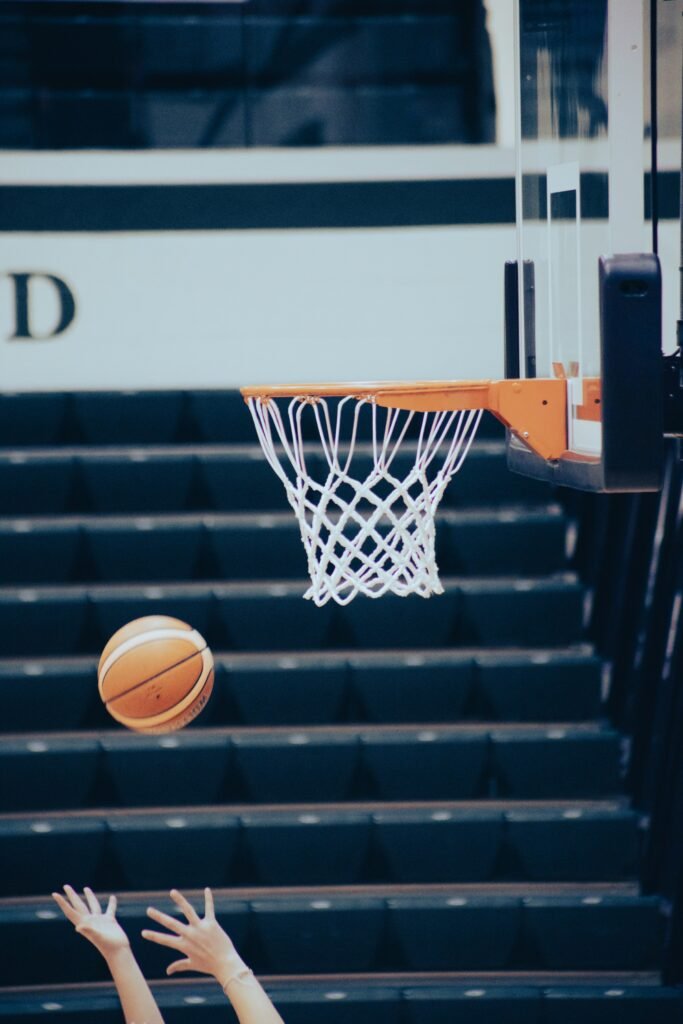
The NBA is testing Bluetooth-equipped basketballs and wrist-worn communication devices during selected 2026 preseason games, but neither experiment will change officiating decisions in the regular season.
The connected basketballs, developed with Wilson, can collect data that may eventually help officials make real-time decisions. For now, however, the league says the information is being gathered strictly for research. The wrist wearables have a more immediate purpose: helping referees communicate with the NBA Replay Center during specific game-management situations.
What the NBA is testing
According to an October 5 report from The Associated Press, selected exhibition games will use a Wilson-developed basketball containing a Bluetooth sensor. The sensor can transmit data from the ball, creating a technical foundation for possible future officiating tools.
The league has not published a complete list of measurements collected by the ball. It also has not said which plays the data might eventually help evaluate. That means claims about automated out-of-bounds calls, shot detection or possession decisions would be premature.
What is confirmed is narrower: the NBA is collecting information to study how connected-ball data could support real-time decisions in the future. During the current preseason test, the data will not influence calls made on the court.
Referees are also trying wrist wearables
The second experiment involves wrist-worn devices for game officials. These wearables connect referees with the Replay Center during designated situations, including:
- Replay reviews
- Scoring corrections
- Game-clock malfunctions
The NBA says the wrist devices previously went through a successful pilot during Summer League. The preseason expands that evaluation into another competitive environment, where crowded arenas, live broadcasts and faster operational demands can reveal reliability or usability problems that a closed test may miss.
The league has not disclosed the wearable’s manufacturer, battery life, wireless protocol, interface or security design. It is also unclear whether referees receive text, vibration alerts, audio prompts or a combination of signals. Those unanswered details matter because any courtside communications system must be fast, difficult to misread and resilient to interference.
The technology will not reach the regular season yet
The most important limitation is that both trials are temporary. The NBA says the technology will not extend into the 2026 regular season at this stage.
That makes these experiments closer to a technical evaluation than a rule change. Fans should not expect the smart ball to overrule referees, automatically stop the clock or settle disputed plays during preseason games. The wrist devices may assist communication in the approved scenarios, but they do not replace the officials or the existing replay process.
The league also has not announced a timetable for a broader deployment. Moving from an experiment to official use would require dependable hardware, clear procedures, training and rules governing what happens when sensor data conflicts with video or an official’s judgment.
Why put a sensor inside a basketball?
A connected ball could provide information that cameras alone may struggle to capture consistently. In theory, a sensor could help establish exactly when a ball was touched, released or moved relative to the clock. It could also create a synchronized data point to compare with arena video and timing systems.
But the practical challenge is larger than collecting data. A competition ball must preserve the weight, balance, bounce and grip players expect. The electronics must also withstand repeated impacts without shifting or affecting performance. Any wireless connection needs to remain reliable in an arena filled with phones, broadcast equipment and other radio signals.
Even accurate data needs interpretation. A sensor may record motion or contact, but the league would still need rules defining when that measurement is authoritative and how it should be presented to referees without slowing the game.
What the wrist devices could improve
Replay decisions often require information to travel between on-court officials, arena staff, scorers and the Replay Center. A wrist device could reduce the need for officials to walk to another location, wait for a message or rely on a crowded audio channel.
Subtle vibration or visual prompts could be especially useful for clock corrections and scoring changes. The challenge will be preventing distraction and making every alert unambiguous. A device that saves seconds in one situation but causes confusion in another would not be ready for full deployment.
Privacy and security still matter
Neither trial is primarily a consumer-privacy story, but connected sports equipment introduces new data and security questions. The NBA and its partners will need to control who can access live ball data, protect the communication link and prevent outside interference.
Operational data may also become commercially valuable. If connected-ball systems eventually generate detailed event information, leagues will have to decide what is used for officiating, what can be shared with broadcasters and what may feed statistics or betting products. The NBA has not announced policies for those possible uses in this test.
What happens next
The preseason gives the NBA a controlled opportunity to test the hardware without committing it to games that count in the standings. Engineers and officials can evaluate connection stability, data accuracy, comfort, workflow and whether either system actually saves time.
If the results are promising, the next step could be a larger pilot or more specific use cases. If problems appear, the league can revise or abandon the technology without disrupting the regular season.
For now, the smart basketball is a research tool and the wrist wearable is a limited communications aid. The experiment is notable because it shows how sensor hardware may enter officiating, but the NBA is not handing decisions to an algorithm—or even to the ball itself.
Featured image: Joshua Hoehne/Unsplash, used under the Unsplash License.