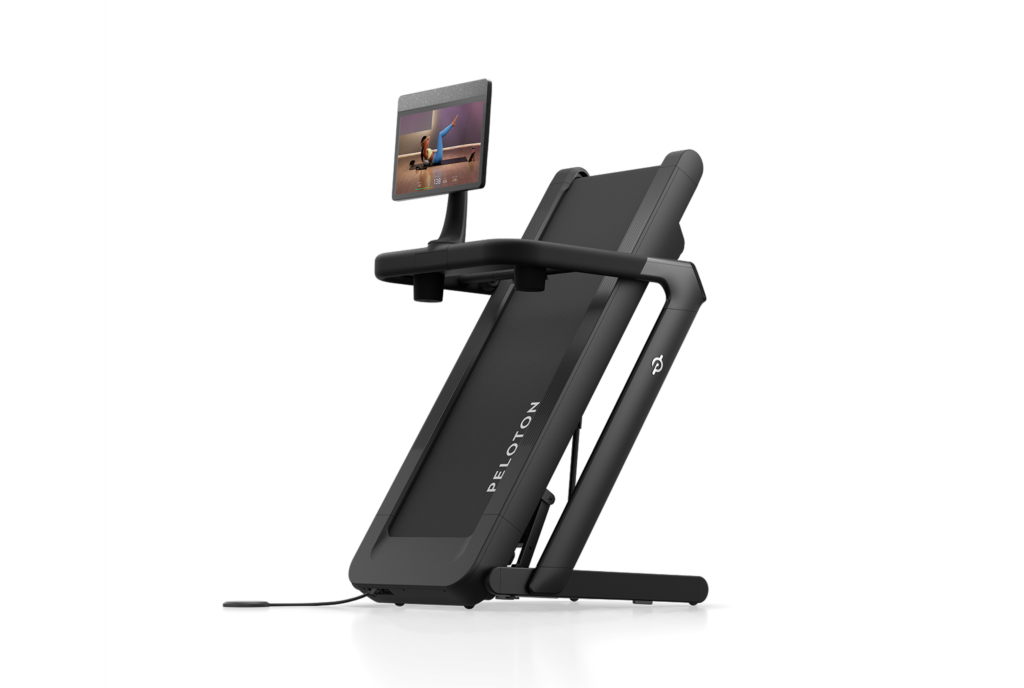
Peloton’s first folding treadmill is now on sale in North America. The Peloton Tread Flex costs $2,195 in the United States and is meant to solve one of the company’s biggest practical problems: a treadmill that dominates the room even when nobody is using it.
The Flex leads a three-model treadmill lineup that also includes the camera-equipped Tread Vision and premium Tread+ Vision. All three became available on October 1, 2026, alongside new Peloton IQ features for personalized pacing, recreated outdoor routes and, on supported hardware, camera-based running-form analysis.
Peloton Tread Flex price and availability
Peloton’s official announcement lists the new U.S. treadmill range as follows:
- Peloton Tread Flex: $2,195
- Peloton Tread Vision: $3,495
- Peloton Tread+ Vision: $6,695
Tread Flex is also available in Canada for C$2,995. Peloton plans to bring it to the company’s other markets in spring 2027, or autumn 2027 in Australia. Tread Vision launched across all Peloton markets on October 1, except Australia, where availability began October 2.
Those are hardware prices. Buyers should also account for the appropriate Peloton membership if they want the company’s instructor-led classes, connected metrics and full software experience. Membership terms and delivery or setup charges can vary by market and promotion.
The folding design is the main attraction
Tread Flex is designed for households that cannot dedicate permanent floor space to exercise equipment. Its deck folds upright, reducing the occupied footprint by nearly half, and four caster wheels help owners reposition it. Peloton says the folded machine occupies less floor area than a Bike+.
A two-cylinder mechanism lowers the running deck gradually rather than allowing it to drop. In a hands-on demonstration, The Verge measured the lowering process at roughly 25 seconds. The wheels lock for stability, and Peloton’s Tread Lock passcode remains part of the safety system.
There is an important limitation: Peloton confirmed that the Flex does not include sensor-based safety features. The treadmill still requires careful placement, supervision around children and pets, and enough clearance for the moving belt and folding deck. “Foldable” also does not mean lightweight or suitable for carrying up stairs; the wheels are intended to help move it across a level floor.
A quieter motor and a shorter running deck
The brushless motor reaches a maximum speed of 12.5 mph. Peloton claims a peak noise level of 70 decibels at that speed without a runner on the belt. Actual sound will depend on the runner, pace, flooring and room acoustics, so the manufacturer’s figure should not be treated as a guarantee for an occupied apartment.
The Flex uses a shorter deck than Peloton’s other treadmills. That saves space and should suit many walkers and average-height runners, but people with an unusually long stride should try the machine before buying if possible. The attached display swivels for strength, stretching and other off-tread workouts.
Unlike the Vision models, the Flex has no movement-tracking camera. That keeps the hardware simpler but excludes it from Peloton’s camera-dependent Run Analysis and form-feedback system.
Peloton IQ adds pace targets and recreated routes
The new software is not limited to buyers of the latest machines. Peloton says compatible older treadmills will receive several of the features where their hardware allows it.
IQ Pace Targets recommends speed ranges for workout intervals using a member’s recent running performance. Peloton expects the targets to adapt as the runner’s fitness and pace change. Reporting from the launch event indicates the system needs roughly ten runs before producing personalized recommendations.
ReRun recreates the elevation profile of an outdoor route on the treadmill. A runner can sync route information captured through the Peloton app and have the treadmill automatically adjust its incline to follow the recorded hills. Peloton is also providing portions of the New York City Marathon course and says it is exploring additional race partnerships.
New guided heart-rate-zone workouts can use data from a compatible smartwatch or fitness band. Peloton also announced a WHOOP connection alongside its existing integrations with Apple Health, Fitbit and Garmin Connect.
What the two Vision treadmills add
Tread Vision and Tread+ Vision use a movement-tracking camera to analyze cadence, vertical oscillation and stride length. Peloton IQ turns those measurements into a Running Efficiency Score and post-workout suggestions. The company presents this as personalized guidance, but it is not a substitute for medical advice or an assessment by a qualified coach or physical therapist.
The $3,495 Tread Vision adds a more cushioned deck and physical jump buttons for faster speed and incline changes. It does not fold, but it offers the camera-based features missing from Tread Flex.
The $6,695 Tread+ Vision uses a slatted, energy-returning belt and adds Sled Mode. That mode can provide up to 300 pounds of resistance for a pushing workout. Peloton says Sled Mode will also come to earlier Tread+ models.
Who is the Tread Flex for?
Tread Flex is the sensible choice within this lineup for walkers, casual runners and apartment dwellers who value floor space more than camera-based form analysis. Its price is $1,300 below Tread Vision, and the folding mechanism is a meaningful advantage for a multipurpose room.
It is still a premium purchase. Less-expensive folding treadmills and walking pads are widely available, and the ongoing membership cost matters when comparing total ownership expenses. Taller runners should also pay attention to the shorter deck, while families should note the absence of sensor-based safety detection.
For committed runners who want automated form measurements, Tread Vision is the more complete technology product. Tread+ Vision is aimed at performance-focused users who specifically want the slatted belt and sled-resistance training. The new lineup is therefore less about one treadmill replacing another and more about Peloton separating space-saving, camera coaching and premium performance into three sharply different price tiers.
Featured image: official Peloton product image showing Tread Flex folded for storage. Credit: Peloton.