Apple is reportedly preparing to enter the smart-display market with a new home hub on October 13. The device, known internally as J490 and widely referred to as the HomePad, is expected to combine Siri, smart-home controls, communication and media in a roughly six-inch square touchscreen.
The key word is reportedly. Apple has not announced the hub, confirmed the HomePad name or published pricing. Reuters reported the October 13 plan, citing a Bloomberg report based on people familiar with Apple’s plans, and said Apple did not immediately respond to a request for comment.
What the reported Apple home hub could be
The hub is described as a compact square display that can sit on a countertop or mount on a wall. That would place it against products such as Amazon’s Echo Show and Google’s Nest Hub rather than against a full-size iPad.
According to The Verge’s summary of the report, the countertop version may use a round metal base containing speakers and microphones, with an arm supporting a tilting screen. A separate wall version is expected to use a slimmer mounting base.
The display is reportedly around six inches, with relatively thick bezels and a body similar in depth to an iPhone. Power is expected to come through USB-C, with no internal battery. If correct, this would be a stationary home appliance rather than a small tablet that owners carry from room to room.
Siri AI is likely to be the main interface
The new hub is expected to arrive alongside Apple’s upgraded Siri AI system. Voice control matters for a device used across kitchens, hallways and shared living spaces, where people may not want to touch the screen every time they turn on a light or check a reminder.
Reported functions include controlling Home and Matter accessories, making video calls, playing music, displaying photos and sending intercom-style messages. Apple is also said to be adapting familiar apps for the smaller screen, including a two-panel version of Messages.
The device may recognize household members by voice or face and show personalized information from their accounts. That could make calendars, reminders and recommendations more useful in a family setting, but it also creates important privacy questions. Apple will need to explain where recognition data is processed, what is stored and how guests or children are handled.
HomePod mini and Apple TV updates may join it
The same report says Apple plans to update the HomePod mini and Apple TV at the launch. Both products are expected to retain their current general designs while receiving faster processors that can support more capable Siri features.
A coordinated release would make strategic sense. Apple TV already acts as a Home hub for automation and remote accessory access, while HomePod provides microphones, speakers and voice control. A screen could give the ecosystem a visible control surface that Apple currently lacks.
However, the report does not establish whether the new hub will replace any existing HomePod or Apple TV functions, whether it will require one of those devices, or which features will work without an Apple Intelligence-compatible iPhone.
Why this matters for Apple’s smart-home strategy
Apple supports HomeKit and Matter, but its home hardware range remains small compared with Amazon and Google. Users can control accessories from an iPhone, iPad, Apple Watch, HomePod or Apple TV, yet there is no dedicated Apple touchscreen designed to remain in a shared room.
A wall-mounted hub could be especially useful for households that do not want to leave an iPad unlocked for everyone. It could provide a fixed place to view cameras, answer a doorbell, adjust climate controls and run scenes. A countertop version could combine those controls with calls, music and family information.
The timing also puts pressure on Apple’s Siri overhaul. A smart display depends on fast, reliable voice responses because the device is meant to be shared and used from across a room. Better hardware alone will not make the product competitive if requests remain inconsistent or supported services are too limited.
What remains unknown
- Price: No credible price has been confirmed.
- Final name: HomePad is reported, not official.
- Exact release date: October 13 is described as the launch date, but retail availability could come later.
- Accessory support: Matter and Apple Home integration are expected, but the complete compatibility list is unknown.
- Camera and privacy controls: Recognition and video-call features are reported, while detailed data-handling policies have not been published.
- Regional availability: The report does not provide a country-by-country launch schedule.
Should you wait before buying another smart display?
People already committed to Apple Home may want to wait until October 13 before buying a new central display. The reported product could offer tighter integration with iCloud accounts, Siri, FaceTime and Apple devices than a rival platform.
Everyone else should avoid making a decision based solely on leaks. Apple has not confirmed the hardware, price or features, and the best smart-home hub is still the one that reliably supports the accessories and services already in the home.
If the report proves accurate, the most important questions will not be the screen size or aluminum finish. They will be how well Siri works in a shared household, how broadly Matter devices are supported, and whether Apple’s privacy controls are clear enough for an always-present home device.
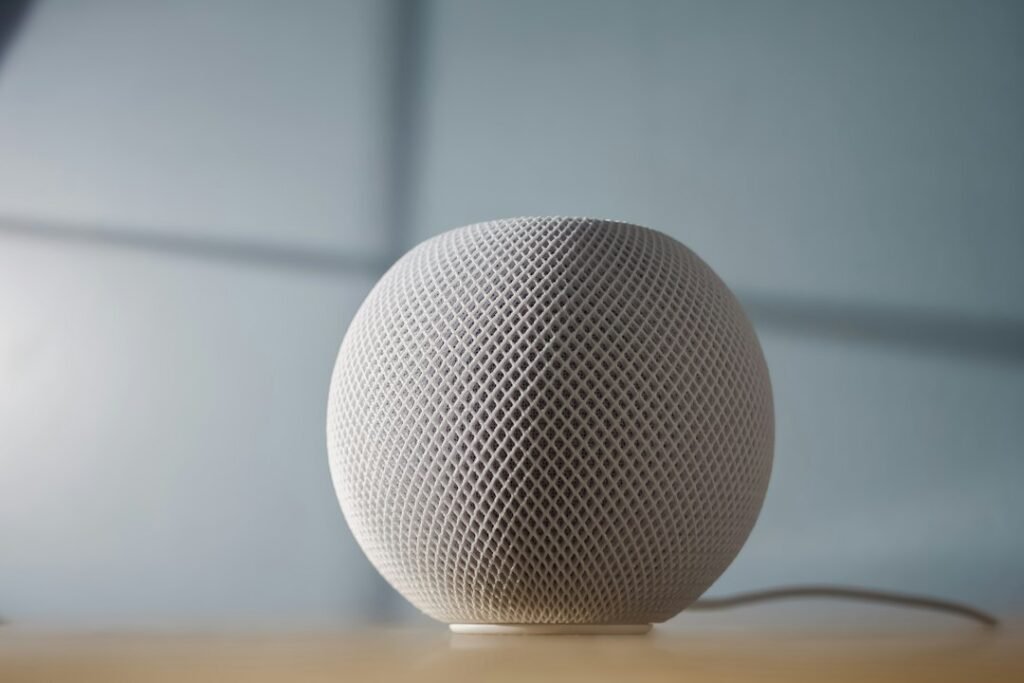
Featured image shows the current HomePod mini, not the reported home hub. Photo by James Yarema on Unsplash.