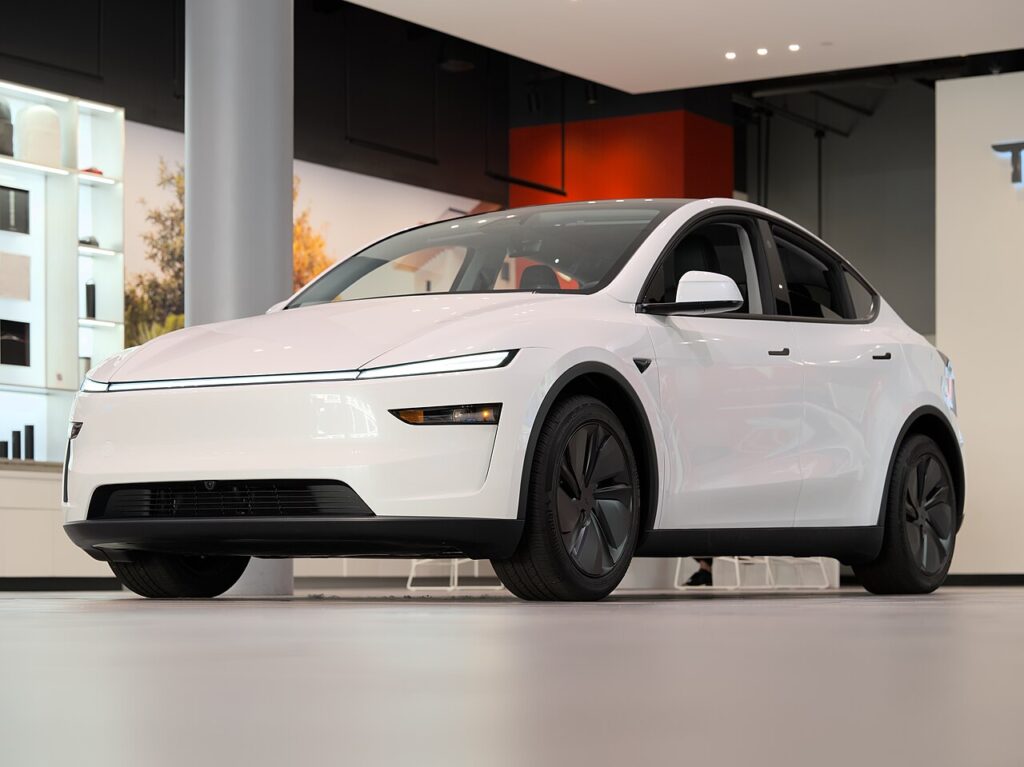
Turo is adding a new way to find Teslas equipped with Full Self-Driving (Supervised), but the name still demands an important reality check. Starting October 28, 2026, U.S. renters will be able to search for and book participating Tesla vehicles whose FSD status has been verified through a direct connection between Turo and Tesla.
The integration could make advanced driver-assistance technology much easier to try without buying a car. It does not, however, turn a Turo rental into a driverless vehicle. Tesla requires the person behind the wheel to remain attentive and ready to take control at all times.
What Turo is launching on October 28
Turo says the new experience will let guests search, discover and book eligible Teslas with FSD (Supervised) activated. The company describes it as the first verified Tesla FSD rental experience in the United States.
The useful part is verification. A host links a Tesla account to Turo, and the platform checks the vehicle’s FSD status through an API integration. Eligible listings can then display that status to renters. That is more reliable than depending on a host to type “FSD” into a description or choose an ambiguous feature label.
Turo says thousands of FSD-enabled Teslas are already listed on its marketplace. It also says the Model 3 and Model Y are the third- and fourth-most popular vehicle models on Turo so far this year. Those claims come from Turo’s own announcement and have not been independently audited for this article.
FSD (Supervised) is advanced assistance, not autonomy
The most important word in the product name is “Supervised.” According to Tesla, FSD (Supervised) can assist with route navigation, lane changes, turns and responding to surrounding traffic. Tesla also states plainly that the feature does not make the vehicle autonomous.
A driver must keep watching the road, keep hands ready and take over whenever necessary. Weather, poor visibility, road construction, faded lane markings and unusual traffic behavior can all affect how an assistance system performs. A rental driver also has the added challenge of learning an unfamiliar car, its controls and its driver-monitoring alerts.
That makes Turo’s pre-trip guidance more than a formality. The company is encouraging renters to review Tesla’s FSD information, safety guidance and applicable rules before pickup. A short tutorial should be treated as a starting point, not permission to stop paying attention.
What renters should confirm before pickup
The verified badge should answer one question: whether the booked car has FSD (Supervised) activated. It may not answer every practical question about the trip. Renters should still check the exact vehicle, pickup instructions and protection terms before confirming a booking.
- Confirm the feature is still active. Subscriptions and vehicle eligibility can change, so check the listing and trip details again near pickup.
- Ask about the software version. Capabilities and interface details can vary by hardware and software release.
- Learn how to disengage. Know how steering, braking and stalk or touchscreen controls override the system before entering busy traffic.
- Review driver-monitoring rules. Repeated inattention warnings can restrict use, and renters should understand what the car expects.
- Read the protection plan. Do not assume driver assistance changes responsibility for a collision, citation or damage.
A renter should also resist treating the trip as a public-road experiment. The safest first use is on a familiar, lower-stress route in good conditions, with enough time to learn the interface without pressure.
What the program means for Tesla owners on Turo
For hosts, the integration creates a standardized way to market a feature that can be difficult to verify from a normal rental listing. Turo says eligible U.S. hosts can receive a one-month FSD (Supervised) trial after linking their Tesla account.
That trial could help more owners test whether the feature attracts bookings. It does not guarantee higher income. Turo has not announced a required price premium for FSD-equipped cars, and demand will depend on location, vehicle condition, trip length and the host’s overall rating. Hosts should also consider whether they want first-time FSD users operating their cars and how clearly they will explain the system at handoff.
Independent reporting from TechCrunch and Electrek confirms the API verification and host-trial details. Electrek reports that Tesla’s subscription price is $99 per month after a trial, although pricing and eligibility can change.
The unanswered insurance and liability questions
Turo’s announcement does not create a new legal category for these rentals. The person in the driver’s seat remains responsible for supervising the car. That distinction matters if the system makes an unexpected move or if a crash occurs while assistance is engaged.
The announcement does not spell out how an FSD-related incident would be handled under every Turo protection plan, personal insurance policy or local law. Coverage can vary, and a driver should not assume that using a built-in assistance feature shifts responsibility to Tesla, Turo or the vehicle owner.
Hosts have their own questions to settle: whether their vehicle’s settings should be reset between trips, how driver profiles are handled, what telemetry is visible after a rental, and how to document that the renter received safety instructions. Turo may provide more operational detail as the rollout begins.
Why Tesla and Turo both want this
For Tesla, every participating rental becomes a longer demonstration than a quick store test drive. A traveler may use the car for several days and encounter highways, city streets, charging stops and parking situations. That can convert curiosity into a subscription or future vehicle purchase—but it can also reveal limitations that a short demo might not show.
For Turo, the feature provides a differentiator from conventional rental counters and gives its host-owned fleet a technology filter that is hard to reproduce manually. Turo cites its own survey finding that 55% of Americans are interested in driverless technology for travel, rising to 71% among Gen Z. Those figures describe stated interest, not adoption, and FSD (Supervised) is not driverless technology despite the broader survey wording.
The practical takeaway
The direct verification is the meaningful change. It should make it easier to find a Tesla that actually has FSD (Supervised) enabled and reduce confusion in listings. For curious drivers, renting may be a more useful evaluation than watching videos or taking a brief test drive.
Still, this is a rental of a car with a sophisticated assistance package—not a robotaxi booking. Renters remain drivers, supervision remains mandatory, and pricing, protection coverage and vehicle-specific capability deserve a careful read before the trip.