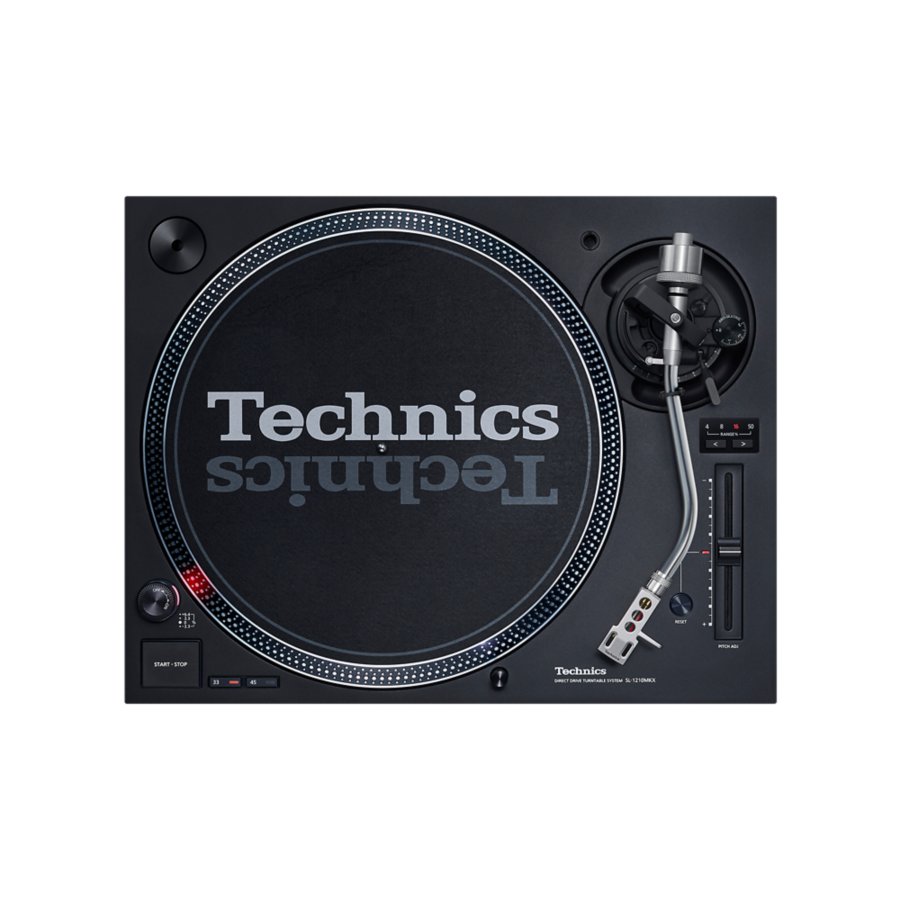
Technics has introduced the SL-1210MKX, a new flagship direct-drive turntable built for professional DJs working in clubs, festivals and touring environments. It sits above the familiar SL-1210MK7 and focuses on three practical upgrades: better resistance to vibration and acoustic feedback, more precise pitch adjustment, and a wider pitch range for performance techniques.
The SL-1210MKX is scheduled to reach selected Technics retailers in January 2027. The recommended price is £1,299 in the UK and €1,499 in Europe. Technics has not announced a US price, so American buyers still need to wait for regional details.
A new flagship aimed at demanding DJ booths
Technics says the SL-1210MKX was developed with input from working DJs and sound engineers. That matters because the design is not simply a cosmetic refresh for home vinyl listeners. It targets the conditions found in professional booths, where powerful subwoofers, vibrating stages and long sets can expose weaknesses that are easy to miss in a quiet room.
The company describes the MKX as an “upper-line” model above the SL-1210MK7. In practical terms, it is intended for headline and touring vinyl DJs, clubs with permanent installations, rental companies and scratch or performance specialists. The familiar black finish and silver tonearm preserve the visual identity of the SL-1200 family, but the changes underneath are the real story.
A heavier chassis is designed to fight feedback
The most important hardware change may be the significantly heavier, better-balanced chassis. Technics pairs it with redesigned isolation feet intended to reduce the amount of vibration reaching the platter and stylus while keeping the deck stable during scratching and cueing.
Acoustic feedback can become a serious problem when a turntable sits near high-output speakers. Low-frequency energy can travel through the floor, booth or air, reach the stylus and create a loop that produces rumble or howl. Technics claims the new construction lets DJs work at higher sound-pressure levels with less risk of feedback. That is a manufacturer claim rather than an independent test result, but it addresses a real concern for clubs and touring setups.
The product page lists the SL-1210MKX at approximately 11.9 kg, with dimensions of 453 × 353 × 169 mm. The added mass is useful for stability, though it also makes the deck less convenient to transport. Touring buyers will need to account for that weight twice over if they carry a conventional two-turntable setup.
Pitch control gets both finer and more extreme
For the first time in the SL-1200 series, Technics has added a dedicated ±4% pitch range. A narrower range gives the pitch fader more resolution, making small tempo corrections easier when two tracks already have similar BPM values.
At the other end of the scale, a new ±50% range greatly expands how far a track can be sped up or slowed down. That is less about ordinary beatmatching and more about turntablism, experimental transitions and other performance techniques. DJs can still use the more conventional pitch settings when they do not need such a wide adjustment.
The combination is more thoughtful than simply adding a bigger number. The ±4% mode is about control and precision; ±50% is about creative range. It lets the same deck serve traditional mixing and more specialized performance styles.
The core direct-drive formula remains familiar
The SL-1210MKX uses a Technics coreless direct-drive motor, with adjustable start-up torque and brake speed. It also supports 78 rpm playback and reverse operation. Those features build on the existing professional formula rather than replacing it with an unfamiliar control system.
Technics also highlights a quieter reset switch inspired by earlier SL-1200 models. A reset control is a small detail, but reducing mechanical noise can matter when the booth microphone is open or the deck is being used in a controlled recording environment.
The company has not presented the MKX as an automatic home turntable or a plug-and-play record player. Buyers should think of it as specialist equipment that is designed around manual control, durability and performance flexibility.
Price and availability
The SL-1210MKX will be available through selected Technics retailers from January 2027 for £1,299 or €1,499. That pricing places it firmly in professional territory and well above many entry-level direct-drive decks.
Technics has not yet published US pricing or a firm American release date. It also remains to be seen how widely stock will be distributed at launch. Buyers outside the announced UK and European markets should avoid converting the European price and assuming the result will match the final local price, because taxes, distribution and regional positioning can change it.
Who should consider the SL-1210MKX?
The strongest case is for clubs, touring professionals and DJs who regularly work around heavy bass and need a deck designed to resist feedback. The finer ±4% pitch range could also appeal to DJs who spend most of their time making subtle tempo corrections, while the ±50% mode expands the deck’s appeal to turntablists and experimental performers.
Home listeners who mainly want to play records may not benefit from the performance-focused controls or the extra weight. Likewise, owners of a reliable SL-1210MK7 should not assume the MKX is an essential upgrade. Its value will depend on whether feedback isolation, finer pitch resolution and the wider creative range solve problems they actually encounter.
What is still unknown
The announcement provides a solid outline of the hardware but leaves several buying questions open. There is no US price yet, and independent reviewers have not had enough time to establish how much the new chassis and feet improve feedback resistance in real venues. Long-term durability, serviceability and real-world pitch behavior will also need testing.
For now, the SL-1210MKX looks less like a nostalgic anniversary edition and more like a targeted professional upgrade. Technics says the “X” stands for “Extreme” and “Expert,” and the feature set supports that positioning. The most meaningful advance may not be any single specification, but the way the deck combines better isolation, finer control and a much wider performance range without abandoning the familiar SL-1200 layout.