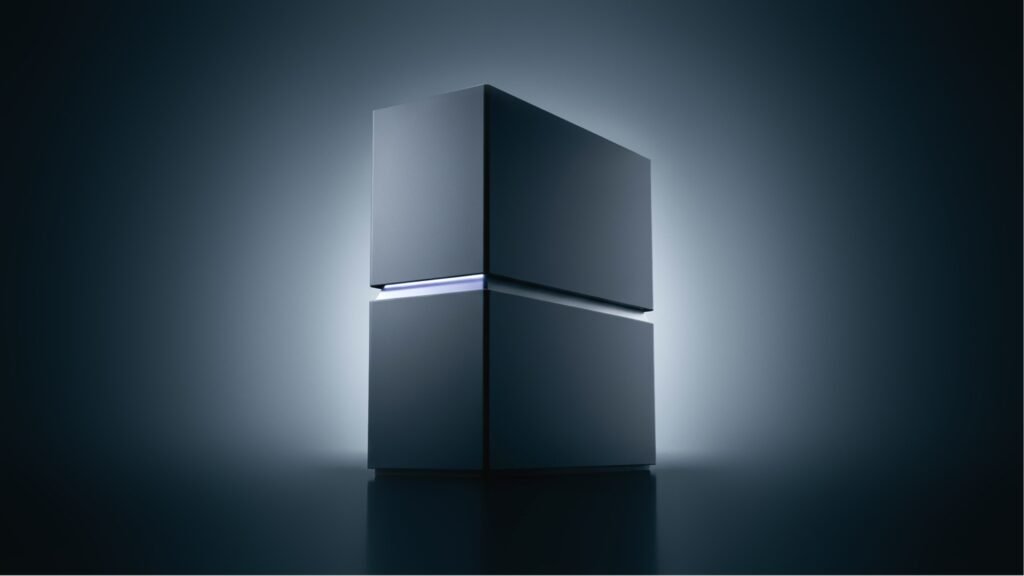
TP-Link has opened preorders for the Archer 8 Ultra, its first consumer Wi-Fi 8 router. The premium tri-band model promises up to 19Gbps of combined wireless capacity, multigigabit Ethernet and stronger performance at the edges of a home network—but it arrives well before Wi-Fi 8 is finalized and before normal consumer devices can use the new standard.
Preorders began September 30 in the United Kingdom, Germany, Australia, Canada and several other markets. TP-Link has not announced US pricing or availability. The UK preorder price is £669.99, while the expected regular price is £899.99; Australia lists the router at AU$1,499.
Wi-Fi 8 focuses on reliability instead of a speed headline
Wi-Fi 8 is based on the developing IEEE 802.11bn standard. Unlike recent Wi-Fi generations that were marketed primarily around higher peak speeds, this release emphasizes consistent performance through interference, congestion, distance and changing network conditions.
TP-Link calls its implementation the Wi-Fi 8 StabilityEngine. At launch, it includes technologies such as Unequal Modulation, new modulation and coding schemes, double low-density parity-check coding and Non-Primary Channel Access. The names are technical, but their intended result is straightforward: fewer sharp performance drops when a device is far from the router or competing with nearby networks.
According to TP-Link’s September 30 announcement, its controlled testing showed up to 33 percent more consistent throughput than Wi-Fi 7 at medium-to-long range and up to 24 percent more consistent throughput under interference. Those are manufacturer results, not independent benchmarks, and real performance will depend on the home, client devices and neighboring networks.
Archer 8 Ultra hardware and ports
The Archer 8 Ultra is a tri-band BN19000 router. TP-Link divides its advertised 19Gbps total into up to 11,528Mbps on 6GHz, 5,764Mbps on 5GHz and 1,376Mbps on 2.4GHz. As with every router carrying a combined speed label, one device will not receive the full 19Gbps; the number adds the theoretical capacity of all three bands.
Eighteen antennas are hidden inside the sculpted chassis. TP-Link rates coverage at up to 3,600 square feet, or 3,000 square feet in the European Union, and says the router can handle as many as 200 connected devices. A Multi-Floor Mode can reshape the signal pattern depending on whether clients are spread across several levels or concentrated on one floor.
Wired connectivity is unusually strong. The router includes two auto-sensing 10Gbps WAN/LAN connections and four 2.5Gbps LAN ports. Regional specifications also list an additional 1Gbps LAN port, with one of the 10Gbps connections using a combination SFP+/RJ45 interface. That makes the Archer 8 Ultra better equipped than most home routers for fast fiber service, network storage and multigigabit desktop connections.
Some Wi-Fi 8 features will arrive later
The standard is still developing, so the launch software does not include the entire Wi-Fi 8 feature set. TP-Link says future over-the-air updates will add or expand technologies designed to improve many-device capacity, communication with distant low-power gadgets and coordination between multiple access points.
This is an important limitation. Wi-Fi 8 certification is not expected until 2028, so the Archer 8 Ultra is built around a draft version of the standard. Firmware can add software features, but buyers are still paying an early-adopter price for technology whose final requirements may evolve.
Aireal AI, security and setup
TP-Link’s Aireal assistant operates through the Tether mobile app. Users can ask plain-language questions about their network, and the assistant is designed to diagnose problems, adjust quality-of-service priorities and reduce interference. The router also supports NFC setup: tapping a compatible phone starts pairing through the app, while guests can tap to join without manually entering a password.
Security features include WPA3, separate guest and IoT networks and a hardware-level VPN that can encrypt selected devices through supported third-party VPN providers. TP-Link also offers its optional HomeShield service for added protection and advanced parental controls. Buyers should confirm which HomeShield features require a paid subscription in their region.
Price and availability
The Archer 8 Ultra is available for preorder in selected markets. TechRadar reports a temporary UK preorder price of £669.99, rising to £899.99, and an Australian price of AU$1,499. France lists a recommended preorder price of €699.99.
There is no confirmed US sale date or price. Tom’s Hardware reports that the model has not received the FCC conditional approval needed for new wireless hardware in the United States. TP-Link says additional regions and pricing will be announced during the broader rollout.
Who should buy it?
Most households should wait. Phones, laptops and tablets with Wi-Fi 8 support are not yet widely available, so current Wi-Fi 7 and older devices cannot use the router’s defining new radio features. Prices should also fall as more Wi-Fi 8 routers and compatible clients reach stores.
The Archer 8 Ultra makes more sense for a networking enthusiast with multigigabit fiber, fast wired devices and a willingness to update firmware as the standard matures. Its two 10Gbps connections, four 2.5Gbps ports and broad wireless capacity can still be useful today, even before Wi-Fi 8 clients arrive.
For everyone else, a good Wi-Fi 6E or Wi-Fi 7 router will cost considerably less and work with the devices already in the home. Wi-Fi 8’s reliability improvements look valuable, but this first wave is mainly a preview of where home networking is heading.
Featured image: TP-Link.