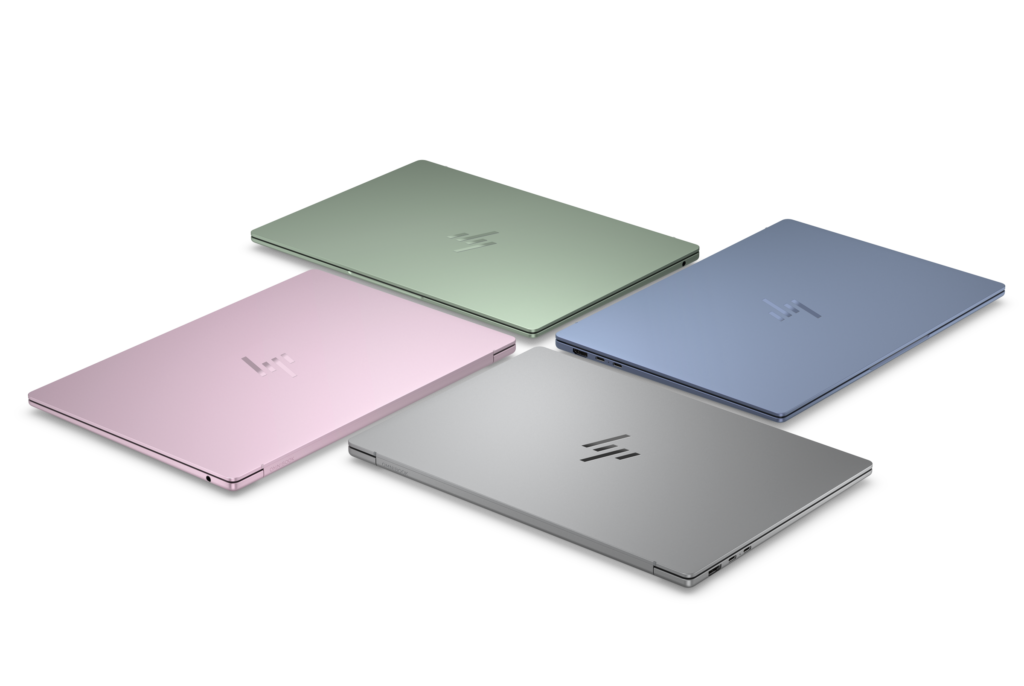
HP is pushing OLED screens further down the Windows laptop price ladder with the new 14-inch OmniBook 5. Announced on October 1, the notebook will start at $699.99 in the US, and HP says every configuration will use an OLED panel rather than reserving the technology for an expensive upgrade.
The entry model combines an Intel Core 5 processor with 8GB of memory and a 256GB solid-state drive. That is modest hardware for 2026, but the display, low weight and compact charger could make the OmniBook 5 an interesting everyday laptop for students, commuters and home users who care more about portability and image quality than heavy creative workloads.
What HP announced
According to HP’s October 1 announcement, the OmniBook 5 14 will go on sale through HP and Best Buy in October. The company lists Smoke Silver, Starlit Blue, Peony Pink and Soft Honeydew finishes, all built around an aluminum chassis with a 180-degree hinge.
The laptop measures about 11.8mm thick and starts at 1.16kg (2.56 pounds). HP is also including a compact 65W USB-C GaN charger. That combination should make it easier to carry than many mainstream 14-inch notebooks, although exact weight can change with the configuration.
Processor options run up to an Intel Core 7 350, while memory options top out at 16GB and storage reaches 1TB. Tom’s Hardware reports that a 12GB memory option and the 1TB SSD are planned for November, rather than the initial launch window.
OLED is standard, but the best panel comes later
The headline feature is a 14-inch OLED screen across the range. The launch panels have a 1920-by-1200 resolution, 100 percent DCI-P3 color coverage and a rated brightness of 300 nits. Touch and non-touch versions are planned.
OLED usually delivers much deeper blacks and stronger contrast than the basic LCD panels commonly found near this price. That should be noticeable when watching films, viewing photos or simply using a dark interface. However, 300 nits is relatively restrained for a modern OLED laptop, especially in a bright room or near a window.
HP says a sharper 2.5K touchscreen option with brightness up to 620 nits is coming in March 2027. In other words, shoppers buying at launch should not assume they are getting the brightest display shown in HP’s marketing. The launch panel is still OLED, but it has lower resolution and brightness than the future flagship option.
Ports, camera and everyday features
The OmniBook 5 includes two full-function 10Gbps USB-C ports, HDMI output and a 3.5mm audio jack. Both USB-C ports support charging and display connectivity. The selection covers the basics, but having only two USB-C ports means a hub may be useful if one port is occupied by the charger.
For video calls, HP includes a 1080p infrared camera with Windows Hello facial recognition, dual microphones and Poly Studio-tuned audio. DTS:X Ultra is also supported. These are sensible additions for remote classes and meetings, though audio and camera quality will need independent testing before any verdict.
The battery is rated at 60Wh. HP advertises up to 42 hours of local video playback, but that figure comes from a controlled test at 200-nit brightness with wireless enabled but disconnected. Real web browsing, video calls and multitasking will use more power, so buyers should treat the claim as a best-case comparison rather than a normal working-day estimate.
Who should consider it?
The OmniBook 5 looks most appealing to people shopping around $700 who want a light Windows laptop with a better-than-basic screen. The colorful finishes and thin aluminum body also give it more personality than the gray plastic systems that still dominate this segment.
There are important tradeoffs. The starting configuration’s 8GB of memory and 256GB SSD may feel restrictive for people who keep many browser tabs open, work with large files or hope to keep the machine for several years. Memory is soldered, according to Tom’s Hardware, so choosing enough RAM at purchase matters. The brighter, higher-resolution OLED option also will not arrive until next year.
Performance remains an open question. HP describes the Intel chips as AI-ready because they include an integrated neural processing unit, but an NPU does not automatically make normal apps faster. Features can also depend on compatible software or subscriptions. Independent reviews will be needed to judge sustained performance, fan noise, battery life and screen behavior.
Price and availability
The HP OmniBook 5 14 is expected to start at $699.99 and reach HP.com and Best Buy in October 2026. Core 7 models are planned for mid-October, while some memory and storage choices will follow in November. The 2.5K, 620-nit OLED touchscreen is scheduled for March 2027.
At its starting price, the OmniBook 5’s standard OLED display is the clearest reason to pay attention. Buyers should still compare the final configuration carefully: more RAM is likely to have a larger long-term effect than a faster processor for typical study, office and browser workloads.
Featured image: HP.