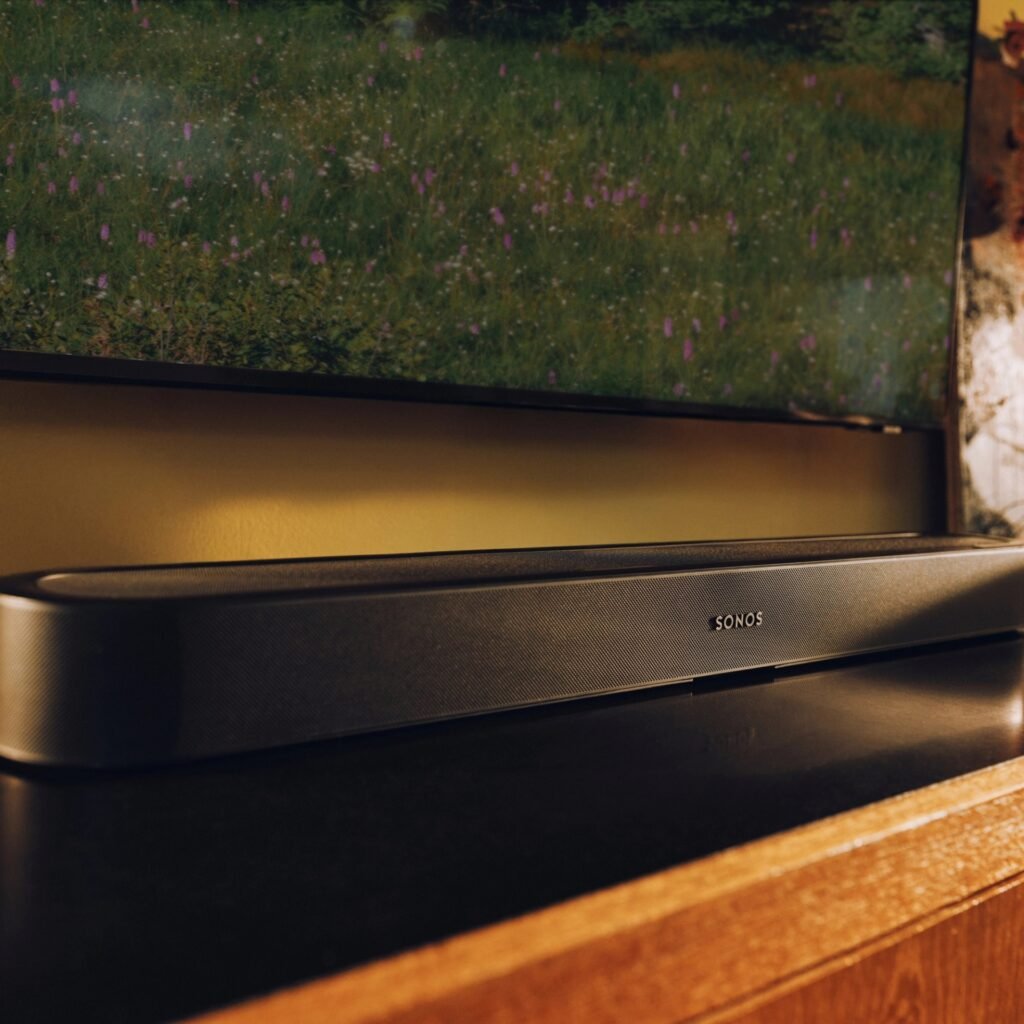
The Sonos Beam Ultra is now broadly available for $699, giving buyers a new middle option between the compact Beam and the larger Arc Ultra. The soundbar officially reached stores on September 29, 2026, after opening for preorders at the start of the month.
Its headline upgrade is a true 7.1.2-channel Dolby Atmos arrangement built into a bar that is only 29.5 inches wide. Sonos uses nine custom drivers, including two dedicated upward-firing units, to create height effects rather than relying entirely on virtual processing. It is an ambitious layout for a soundbar designed to fit beneath many midsize televisions.
$699 buys the soundbar—not a complete surround package
The Beam Ultra costs $699 in the United States and is available in black or white. The box includes the soundbar, a power cable, an HDMI cable and setup documentation. A wireless subwoofer and rear speakers are not included.
That distinction matters because the 7.1.2 label describes the soundbar’s processing and driver configuration, not a box filled with separate speakers. Buyers can expand the system later with a compatible Sonos Sub and rear speakers. Sonos says compatible portable models can also serve as surrounds, giving existing Sonos owners more ways to reuse equipment they already have.
What changed inside the Beam Ultra
According to Sonos’s launch announcement, the nine-driver design includes two upward-firing speakers for Dolby Atmos height information. Sonos also redesigned the center channel, where most movie and television dialogue is concentrated, and added four levels of AI Speech Enhancement.
The speech feature is intended to make voices easier to follow when effects are loud or a room is noisy. It is adjustable in the Sonos app rather than permanently applied at one strength. Night Sound takes a different approach by reducing the impact of loud moments while raising quieter details, which can help when watching after other people have gone to sleep.
Sonos says the new hardware produces warmer bass, wider movie sound and clearer dialogue. Those are manufacturer claims. We have not independently tested the Beam Ultra, so buyers should not treat them as measured performance findings from Gadget N Widget.
Connections cover the essentials, with two notable gaps
The Beam Ultra connects to a television through HDMI eARC and supports Wi-Fi, Bluetooth and Apple AirPlay 2. It works with a TV’s regular remote, while the Sonos app handles setup, streaming services, room tuning and sound adjustments. Trueplay calibration is available to adapt the output to a room.
There is no extra HDMI input for passing a console or disc player through the soundbar. That means the Beam Ultra occupies the TV’s eARC port without replacing it with another connection. The bar also supports Dolby Atmos but not DTS:X, an important limitation for people with Blu-ray collections that use DTS-based soundtracks.
Those omissions were confirmed in TechRadar’s independent review, which lists HDMI eARC, Wi-Fi 6, Bluetooth 5.3 and USB-C among the connections. The review also confirms that neither a subwoofer nor rear speakers are included.
A compact footprint for midsize rooms
The soundbar measures approximately 29.5 inches wide, 2.6 inches tall and 4.1 inches deep. That makes it easier to place on smaller media consoles than many premium flagship bars. Its low height should also reduce the chance of blocking the bottom of a television, though every stand and screen arrangement is different.
Sonos positions the Beam Ultra for people who want stronger Atmos effects than a basic all-in-one bar can provide but do not have room for a much wider flagship model. The two physical height drivers are the most meaningful part of that pitch because they give overhead effects dedicated hardware inside the bar.
It fits best inside the Sonos ecosystem
Like other Sonos speakers, the Beam Ultra can join a multiroom audio system and stream from more than 100 supported services. Owners can add a Sonos Sub and surrounds, group the bar with speakers in other rooms or move TV sound to compatible Sonos headphones for private listening.
That expandability is valuable if a home already uses Sonos. For a first-time buyer, it also creates a future upgrade path—but each additional component raises the total cost substantially. People who want a subwoofer and rear channels immediately should compare complete multi-box systems at the same overall budget.
Who should consider it?
The Beam Ultra makes the most sense for apartment dwellers, midsize-room owners and current Sonos users who want real up-firing Atmos drivers without installing a very wide soundbar. The adjustable speech modes may also appeal to households that frequently struggle with quiet dialogue.
It is less compelling for buyers who need DTS:X, HDMI passthrough or the deepest bass from a single purchase. A separate subwoofer system may deliver more low-end impact for similar money, though it will take up more space. The $699 price is also high enough that shoppers should compare full system costs, not only the price of the bar.
The practical takeaway
The Beam Ultra is not a budget soundbar, but its design addresses a clear gap: convincing Dolby Atmos hardware in a relatively compact package. Its September 29 release makes the price and availability concrete, while the optional Sonos ecosystem lets buyers start with one bar and expand later.
The key buying decision is whether that compactness and expandability outweigh the missing DTS:X support, absent HDMI passthrough and extra cost of a subwoofer or surrounds. Those tradeoffs are easier to accept in an existing Sonos home than in a completely new setup.
Featured image: Sonos.