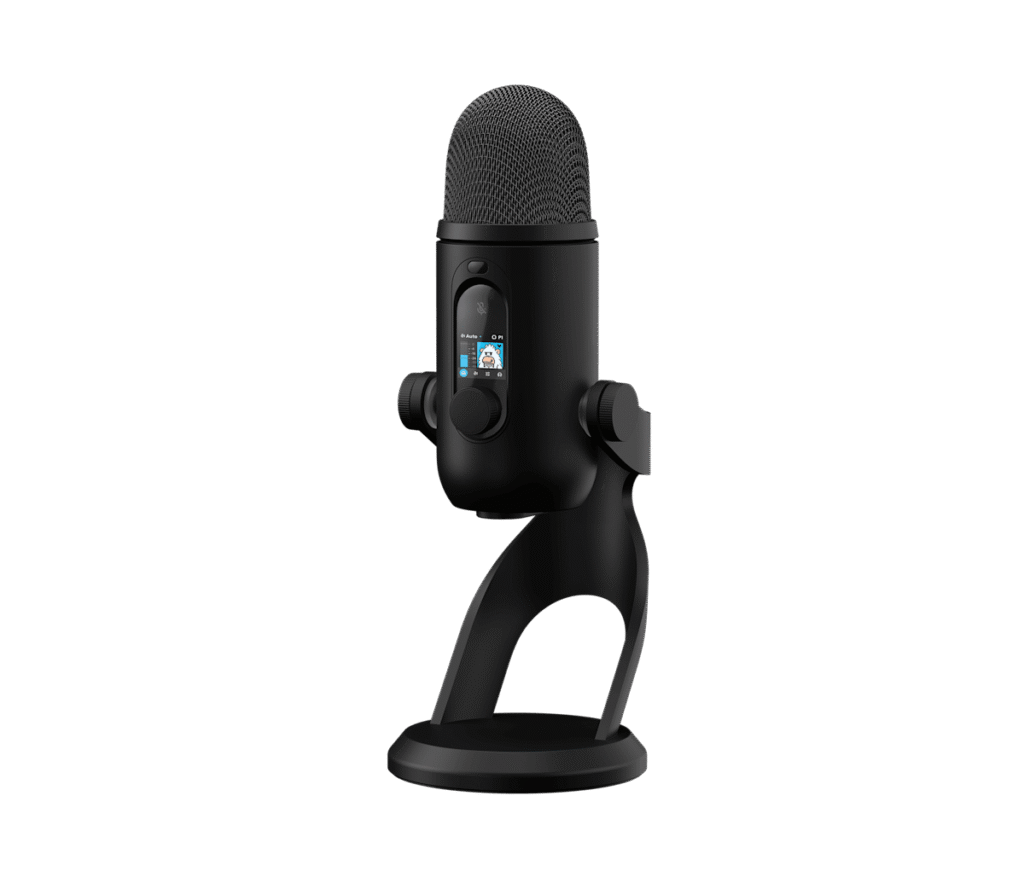
Logitech has given its best-known desktop microphone a major redesign. The new Logitech G Yeti 2 adds a voice proximity sensor, automatic audio adjustments, AI-powered noise reduction and a small color screen while keeping the familiar stand-mounted shape and simple USB connection.
The microphone was unveiled on September 23 at Logitech G PLAY 2026. Logitech’s US store now lists the black and white versions for $159.99, with the black model shown as in stock at the time of publication.
A smarter take on the classic Yeti
The original Yeti became popular because it put several recording patterns and straightforward controls into one USB microphone. Yeti 2 keeps that accessible approach, but its headline feature is designed for creators who do not stay perfectly still while speaking.
According to Logitech’s launch announcement, the microphone’s proximity sensor locates the speaker in three dimensions. It can then change gain, equalization and the pickup pattern in real time. Logitech says the system is meant to keep a voice consistent when someone leans back, turns toward a second monitor or becomes more animated during a stream.
That is more ambitious than a conventional auto-gain feature, which usually reacts only to volume. The practical appeal is clear for livestreamers, video callers and solo podcasters: fewer sudden jumps between a whisper and clipping when the distance to the microphone changes.
AI denoising is part of the package
Yeti 2 also includes an AI-powered denoiser that Logitech says can separate speech from common background distractions. The processing sits alongside Blue VO!CE tools in Logitech G HUB, where users can adjust settings and use community-created voice profiles.
There are limits worth keeping in mind. Logitech has not published independent comparisons showing how the denoiser handles keyboard noise, room echo or two people speaking at once. Strong noise reduction can also make a voice sound processed, so users who record music or carefully treated podcasts may prefer lighter processing or manual settings. A better microphone position and a quieter room still matter.
The front screen gives visual feedback
A small color LED display on the front turns setup information into simple visual cues. Logitech’s design story for Yeti 2 explains that the onscreen Yeti character sleeps when the microphone is muted, looks happy when gain is in a good range and becomes angry when audio clips.
Users can replace the character with a custom avatar. It is a playful idea, but the screen also solves a real problem: it lets a creator confirm mute status and input level without hunting for a software window during a call or livestream.
Core specifications and setup
The official US product page describes Yeti 2 as a multi-pattern USB microphone with Blue VO!CE. It records at 24-bit/48kHz, has a stated 20Hz–20kHz frequency response and a maximum sound pressure level of 129dB SPL at 10% total harmonic distortion.
Logitech says the automatic modes are enabled out of the box. The microphone connects over USB-C, so it does not need an audio interface, mixer or external preamp for normal computer use. Deeper control is available through Logitech G HUB.
The microphone measures about 11.4 inches tall on its included desktop stand and weighs roughly 2.2 pounds. That weight should help stability, but it also makes Yeti 2 less portable than compact travel microphones. Logitech backs it with a two-year limited hardware warranty.
Who should consider it?
Yeti 2 looks most useful for creators who want cleaner, more consistent speech without constantly watching meters. Its automatic tracking could be particularly helpful for game streamers, online teachers and presenters who move around while talking. The display also makes mute and clipping status easier to see at a glance.
Owners of a working Yeti should not assume that the new model will automatically sound better in every room. The meaningful upgrade is convenience: adaptive processing, noise reduction, onscreen guidance and direct G HUB control. Buyers who already use a separate audio interface, a broadcast-style dynamic microphone or manual processing may have less reason to switch.
Price, availability and unanswered questions
Logitech lists Yeti 2 at $159.99 in the United States in black or white. The black version was marked “in stock” when this article was prepared, but inventory and regional pricing can change.
The company has not yet provided independent test results for its voice tracking or denoising claims. Real-world performance with mechanical keyboards, loud fans and reflective rooms will need evaluation by reviewers. Until then, the sensor and AI features should be treated as promising manufacturer claims rather than proven replacements for careful microphone placement and room control.
Featured image: Logitech. This article is based on official specifications and announcements; Gadget N Widget has not performed hands-on testing.