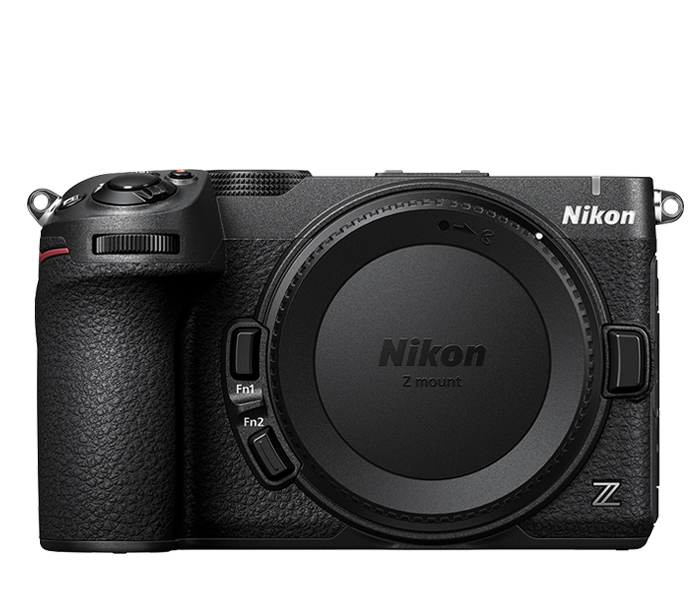
Nikon’s new Z5IIC is a $1,399.95 full-frame mirrorless camera aimed at people moving beyond smartphone photography—but its most important design choice is what Nikon left out. There is no electronic viewfinder. Framing, focusing and menu control happen through the 3.2-inch vari-angle touchscreen.
Preorders are open in the United States, with availability expected in mid-October 2026. Nikon prices the body at $1,399.95 and a kit with the NIKKOR Z 24-50mm f/4-6.3 lens at $1,699.95. Black and silver versions are planned.
A Z5II-style camera built around the rear screen
The Z5IIC uses a 24.5-megapixel backside-illuminated full-frame CMOS sensor and Nikon’s EXPEED 7 processor. Nikon says its core performance is comparable to the Z5II, but the new model has a flatter top and removes the viewfinder to create a more casual, screen-first shooting experience.
That approach should feel familiar to smartphone photographers. The screen supports gestures such as swiping, pinching and double-tapping, and it can be used to set focus or release the shutter. A substantial grip remains, so this is not simply a flat compact camera with a large sensor.
The official dimensions are roughly 5.3 × 3.2 × 2.9 inches, and the body weighs about 19 ounces, or 538 grams. Magnesium alloy is used in key areas, while Nikon says the design includes dust- and drip-resistance. Those protections are useful for everyday travel, though they should not be confused with waterproofing.
Beginner controls without abandoning advanced tools
The mode dial includes 15 scene options—the first such implementation on a Nikon full-frame mirrorless camera. Choices cover subjects such as portraits, pets, food and night landscapes, with the camera automatically adjusting settings including white balance and Picture Control.
A dedicated button recalls Nikon Imaging Recipes, which are presets made by Nikon and participating creators. The idea is to give photos and videos a particular color and tonal style in-camera, reducing the need for editing later.
Nikon also includes deep-learning subject detection and automatic scene analysis. Subject options now include fish, alongside the more familiar people, animals and vehicles. These are manufacturer-described autofocus capabilities; actual reliability will depend on the subject, lens, lighting and shooting conditions.
Stabilization and burst performance
In-body vibration reduction is rated for up to 7.5 stops at the center of the frame and 6 stops toward the edges under Nikon’s stated CIPA test conditions. That can help with handheld stills and video, but it cannot freeze a moving subject the way a faster shutter speed can.
The Z5IIC can shoot at up to about 14 frames per second in its regular high-speed mode. A High-Speed Frame Capture+ option reaches 30 fps and can retain images from up to one second before the shutter is fully pressed, although that mode is restricted to large, normal-quality JPEG files.
Video features—and the important crop
Video recording reaches 4K UHD at 60 fps, but Nikon applies a DX-format crop at that setting. Full HD can be recorded at up to 120 fps, and the camera includes four- and five-times slow-motion options.
Creators also get 10-bit H.265 recording, N-Log and support for recording N-RAW to an SD card. Nikon recommends a V90 card for demanding RAW-video formats. Product Review Mode is designed to move focus quickly from a presenter to an object held near the lens, while a tally lamp and red on-screen border make recording status clear.
The camera supports UVC and UAC, allowing it to work as a webcam over USB without a separate capture device. Wi-Fi connectivity and Nikon Imaging Cloud can move full-resolution files to supported cloud services and deliver firmware updates.
The tradeoffs buyers should understand
The missing viewfinder is not a minor detail. A rear screen can be harder to see in bright sunlight, and holding a camera to the eye often provides a steadier shooting position—especially with longer lenses. Photographers who regularly shoot sports, wildlife or outdoor events may prefer the Z5II or another body with an EVF.
The Z5IIC also has one UHS-II SD card slot rather than the redundancy that dual-slot bodies can provide. The 4K/60p crop narrows the field of view, so vloggers and indoor creators may need a wider lens than expected.
On the positive side, Nikon retains in-body stabilization, a mechanical shutter, a hot shoe, advanced autofocus and RAW-video options. The camera is therefore more than a simplified point-and-shoot, despite its beginner-friendly controls.
Who should consider the Nikon Z5IIC?
The clearest audience is a smartphone creator or first-time interchangeable-lens buyer who wants full-frame depth, low-light potential and access to Nikon’s Z-mount lens system without learning every technical setting immediately. It may also suit experienced photographers looking for a secondary, screen-focused body.
At $1,399.95 before adding a lens, it is not an inexpensive entry point. Buyers should decide whether the slimmer design and approachable controls are worth giving up a viewfinder. Nikon’s existing Z5II remains the more conventional choice for photographers who want to compose at eye level.
Featured image: Nikon USA.