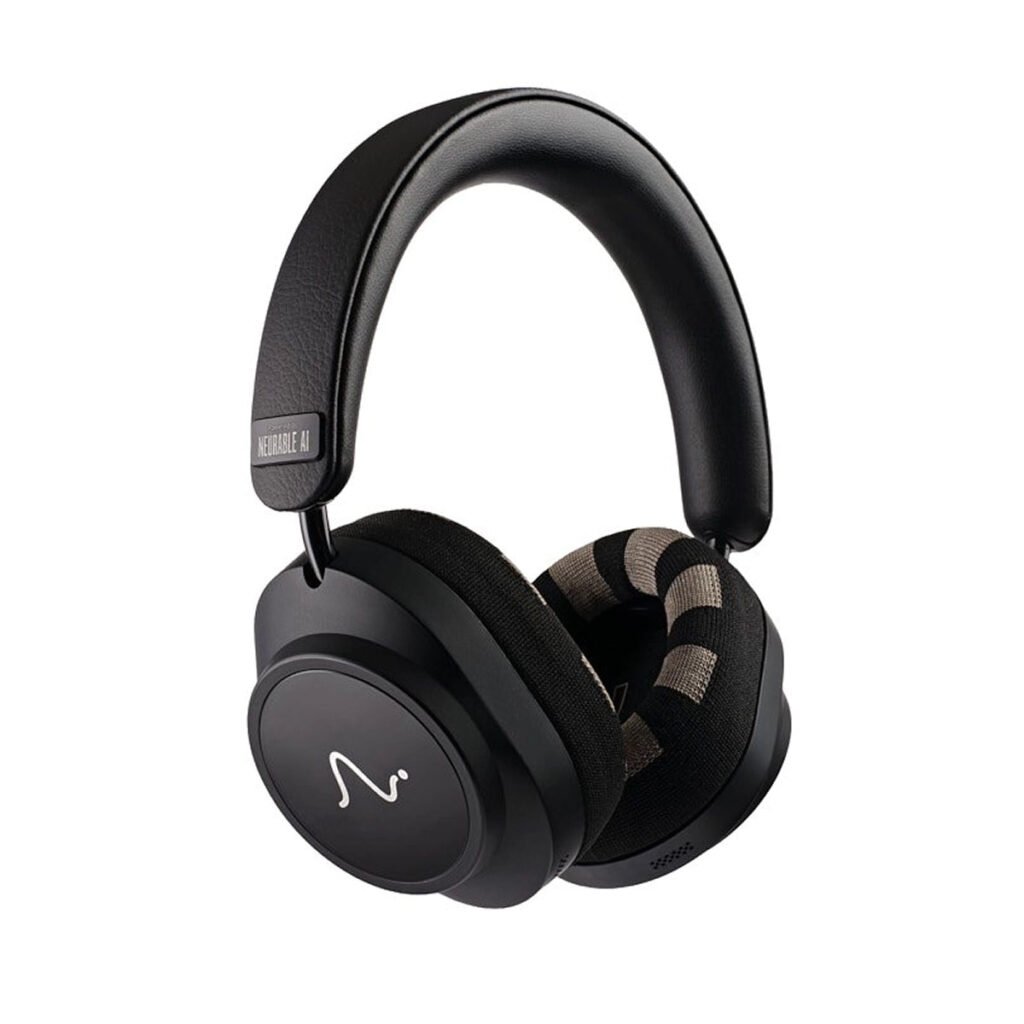
Neurable has launched its first brain-sensing headphones designed and sold under its own name. The Neurable One costs $499 and places 12 dry electroencephalography (EEG) sensors inside the ear pads, where they measure electrical activity while the user works, listens to music or takes a short cognitive check-in.
The pitch is not that the headphones can read thoughts. Neurable says they analyze patterns associated with focus, mental effort, sleepiness and fatigue, then provide feedback through an iOS or Android app. The One is also a conventional pair of premium wireless headphones, with active noise cancellation, ambient listening and 40mm beryllium drivers.
Orders are open in the United States. Neurable’s current product page says the first 700 customers are receiving units and new orders typically ship in four to eight weeks, depending on batch timing. International shipping has not been announced.
How the EEG system works
EEG measures electrical activity at the surface of the head. Medical EEG tests usually use multiple electrodes attached to the scalp, but Neurable has woven six dry sensors into each ear pad. The sensors sample at 125Hz with 16-bit resolution, while a six-axis motion sensor helps the system distinguish useful signals from movement.
Everyday EEG is difficult because walking, jaw movement, music and even the headphones’ noise cancellation can add interference. Neurable says its signal-processing software filters that noise so the system can compare each user’s readings over time. The company’s launch announcement says the technology reflects more than a decade of development.
The headphones can run a one-minute, eyes-closed check-in to establish a baseline. During a work session, they display live focus data, adjust audio when attention drifts and suggest a break when the system detects fatigue. Weekly and monthly reports are intended to show how habits such as sleep, caffeine or breaks correlate with longer-term trends.
Eight metrics, including Brain Battery and Brain Age
The Neurable app reports eight measurements: Brain Age, Brain Battery, processing Speed, Focus, mental Load, Stress, Sleepiness and Alpha Peak Frequency. The last measure represents the user’s strongest resting alpha rhythm, while Brain Battery estimates how much cognitive reserve remains that day.
These labels should not be mistaken for a clinical evaluation. Neurable says Brain Age and Alpha Peak Frequency need weeks or months of consistent check-ins before their trends stabilize. The company also says each measurement is compared with the user’s previous readings, rather than used to define a person or diagnose a condition.
IEEE Spectrum’s early testing found that obtaining a clean signal could sometimes require repeated fit adjustments, even when the headphones felt snug and hair had been moved away. That is an important practical limitation for any dry-sensor wearable: the quality of skin contact can affect whether the app gets a useful reading.
Headphone specifications and battery life
Outside the brain-sensing system, Neurable One uses 40mm beryllium drivers and six microphones. It supports active noise cancellation and ambient listening, along with Bluetooth 5.2, AAC and aptX. Two devices can be paired at the same time.
Neurable rates battery life at 22 hours for normal audio, falling to 12 hours with EEG running. Charging is through USB-C, and the company says a 15-minute charge provides about two hours of use. EEG pauses while the headphones are charging and when the battery drops below 20 percent.
The headset weighs 345 grams, or about 12 ounces. Materials include a vegan-leather headband, anodized aluminum and nylon ear pads. The box contains a carry pouch, USB-C cable and a USB-C-to-3.5mm audio cable.
Brain-data privacy deserves attention
Neurable states that it does not sell brain data or use it for advertising. According to the official product page, recordings are processed and stored on Neurable’s servers, while the resulting metrics remain on the user’s device. Customers can request deletion of their data.
That distinction matters because raw neural recordings can be more sensitive than ordinary listening-history data. Buyers should review Neurable’s privacy and health-data policies before enabling EEG, particularly if the headphones will be used at work. The company says individual data stays with the user, but employers and institutions should still avoid treating wellness estimates as performance scores.
Not a medical device—and not a mind reader
Neurable explicitly describes the One as a consumer wellness product. It is not intended to diagnose, treat or monitor a medical condition, and its EEG readings should not replace advice or testing from a healthcare professional.
The system also does not decode thoughts, words, images or mood. It looks for surface electrical patterns associated with attention, effort and fatigue. That makes it closer to a fitness tracker for cognitive routines than a clinical brain scanner.
Who should consider Neurable One?
The most likely buyers are people who already want premium noise-cancelling headphones and are curious about quantified focus. Students, programmers, writers and other knowledge workers may find the break reminders and long-term trend reports useful. The app also includes modes intended for meditation and short naps.
At $499, however, Neurable One is substantially more expensive than many excellent wireless headphones. The EEG features justify that premium only if the wearer will check the data consistently and accept the shorter 12-hour battery life during sensing. Buyers who mainly want music, calls and noise cancellation can find longer battery life for less money.
Neurable provides a one-year warranty for manufacturing defects and allows returns within 14 days of delivery. Because this is new hardware produced in batches, shoppers should also consider the quoted four-to-eight-week shipping window before ordering.
The practical takeaway
Neurable One is an ambitious combination of audio gear and consumer neurotechnology. Its biggest advance is making passive, long-term EEG tracking look like a normal pair of headphones. The hardware specifications are credible for daily listening, and the company is unusually direct about what the device does not claim.
The unanswered question is whether the focus and fatigue feedback will be reliable enough—and comfortable enough—to change behavior over months. Early buyers should treat the readings as personal wellness signals, not medical facts, and evaluate the headphones first on fit, sound and everyday usefulness.