Microsoft has opened preorders for the Surface Laptop Ultra, a 15-inch Windows laptop built around Nvidia’s new Arm-based RTX Spark platform. It starts at $2,599 and will be available beginning October 16, putting it well above mainstream premium laptops and squarely in workstation territory.
The headline specification is not merely a faster processor. Microsoft is pairing an Nvidia Grace CPU and Blackwell RTX graphics in a unified-memory design intended to run large AI models, creative applications and games locally. The top configuration reaches 128GB of memory and costs $5,899.99, so this is a specialist machine rather than a broad replacement for the regular Surface Laptop.
Surface Laptop Ultra price and release date
Preorders opened on October 7 through Microsoft and selected retailers, with general availability scheduled for October 16. The base $2,599 configuration includes an 18-core processor, 24GB of unified memory and 512GB of storage, according to The Verge’s launch report.
At the other end of the range, a $5,899.99 model combines a 20-core CPU, 128GB of memory and 1TB of storage. Microsoft also announced a separate $5,999 Surface RTX Spark Dev Box for desk-based AI development, but that product will not begin shipping in the United States until November.
Microsoft is offering the laptop in Platinum and Nightfall finishes. Availability of colors, processors and configurations can vary by market, so buyers should check the local store listing rather than assume every combination will ship everywhere.
What the RTX Spark hardware changes
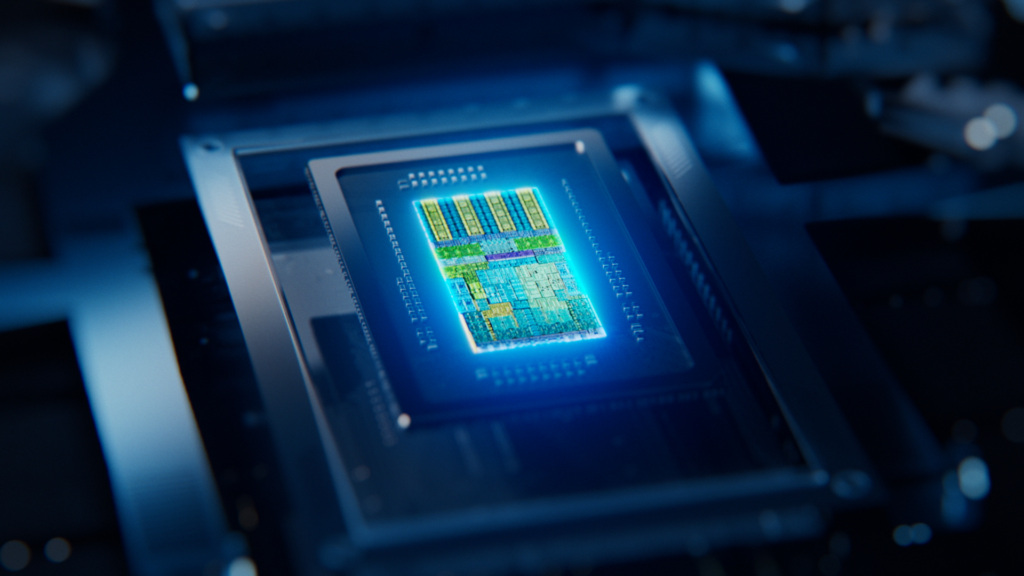
The Surface Laptop Ultra uses Nvidia’s RTX Spark Superchip, combining a Grace CPU with a Blackwell RTX GPU. Microsoft says the maximum specification includes up to 20 CPU cores, 6,144 GPU cores and 128GB of unified memory shared between the processor and graphics system.
That large shared memory pool is central to the pitch. Microsoft says the laptop can run AI models exceeding 120 billion parameters locally and deliver up to one petaflop of theoretical FP4 AI performance. Those are manufacturer claims, and real results will depend heavily on the model, software, precision, cooling and configuration. The “one petaflop” figure also uses sparsity, so it should not be read as a universal application-performance number.
The company is targeting developers, video and 3D creators, researchers and other users who would otherwise send demanding work to cloud services or a desktop workstation. Nvidia’s CUDA software ecosystem is an important advantage for supported professional and AI tools. For gaming, the machine also supports ray tracing, DLSS and Nvidia Reflex in compatible titles.
A bright touchscreen and unusually complete ports
The 15-inch PixelSense Ultra touchscreen reaches a claimed 2,000 nits of peak HDR brightness, measured in a 10% window. That is not the same as sustained full-screen brightness, and Microsoft says actual output varies with content and settings. The display supports touch input, but the company specifically says it does not support Surface Pen or similar styluses—an important limitation for illustrators expecting a typical Surface experience.
The aluminum chassis is less than 18mm thick and weighs under 4.5 pounds, depending on manufacturing variation. Microsoft says a redesigned cooling system offers up to 2.5 times the thermal capacity of its current Surface laptops. That should help sustained workloads, although independent testing will be needed to establish fan noise, surface temperatures and performance over long sessions.
Connectivity is more practical than on many thin professional laptops. There are three USB-C ports in total, including a right-side port used by Microsoft’s new magnetic USB-C charging cable. The connector detaches when pulled while the port remains available for ordinary USB-C data and video use. The laptop also includes HDMI, USB-A, a full-size SD card reader and a 3.5mm headphone jack, and Microsoft says it can drive up to three compatible 4K external displays.
The touchpad is 30% larger than the one on the Surface Laptop 8th Edition and uses haptic feedback. Storage is user-removable, although Microsoft cautions that replacement options differ by market and that damage caused during a repair may not be covered by warranty.
Local AI is the promise, but price is the barrier
Microsoft is positioning the Ultra as hardware for its broader “hybrid intelligence” strategy: some tasks run on the laptop, while others use cloud models when they need more capacity. The company says GitHub Copilot will be able to route work to local models, and its Microsoft Execution Containers technology is designed to limit which files and networks AI agents can access.
That approach could reduce cloud usage and keep some sensitive work on the device. It does not automatically make every AI task private, however. Features that call online services can still send data off the machine, and organizations will need to configure access rules and review the policies of each model or service.
The entry price is the clearest constraint. Reuters reported that rising memory costs have pushed this class of local-AI hardware beyond the price of earlier Copilot+ PCs. The $2,599 base machine has substantially less memory and storage than the flagship, while the top model approaches $6,000 before accessories or extended support.
Who should consider it
The Surface Laptop Ultra makes the most sense for professionals who can use Nvidia-accelerated applications, need unusually large unified memory on the move or want to experiment with substantial local AI models. The broad port selection and removable storage also answer common complaints about high-end thin laptops.
Most shoppers should wait for independent reviews. Microsoft has made ambitious performance and display claims, but the launch announcement does not settle practical questions about battery life, sustained speed, fan behavior, Windows-on-Arm compatibility for each specialized application or the performance gap between configurations.
For buyers who mainly browse, work in office apps, edit occasional photos or use cloud AI, a regular Surface Laptop or another Copilot+ PC will cost far less. The Ultra is better understood as a portable AI workstation—and its price reflects that.