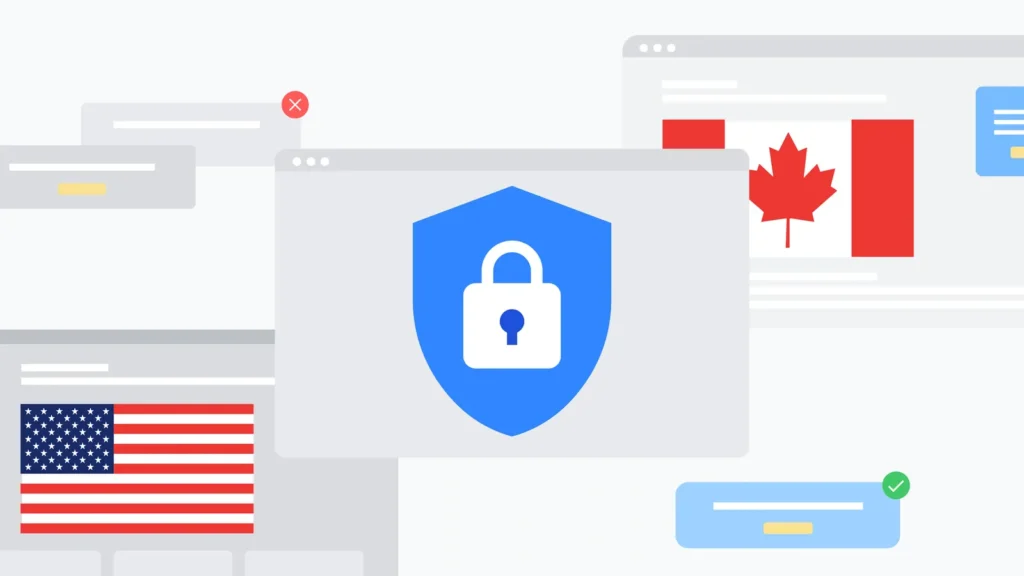
Google is preparing a significant change to financial advertising in North America. Beginning in early 2027, the company plans to require certain financial-services advertisers targeting the United States and Canada to prove that they are authorized by an appropriate regulator or listed in a recognized registry.
The new requirement goes beyond Google’s existing identity-verification system. It is designed to make it harder for scammers to pose as banks, lenders, investment firms and other trusted financial brands in paid search results and across Google’s advertising network.
What Google is changing
Google calls the program Financial Services Verification. Under the policy, affected advertisers will need to provide evidence that they are authorized to offer the financial products or services they promote. Google says the exact credentials, accepted registries and onboarding steps will be tailored to each country.
The company plans a phased launch in early 2027. Advertisers will be notified if and when their accounts must complete the process, and Google says it will publish country-specific instructions before enforcement begins. That means the announcement is a roadmap rather than an immediate change for people seeing ads today.
Google already asks advertisers to verify their identity. According to the company, more than 97% of ads shown to people in the U.S. and Canada currently come from identity-verified advertisers. Financial Services Verification adds a separate check focused on professional authorization and registration.
Why this matters for consumers
Financial scams often work by borrowing the appearance of a legitimate institution. A fake ad can use a familiar company name, send someone to a convincing imitation website and then ask for login details, a payment or personal information.
Credential checks raise the cost of that impersonation. A bad actor would have to get through not only identity checks but also a review of whether the advertiser is authorized to promote the covered service. Google says the program already operates in 42 countries and reaches about two billion internet users.
In the U.S., Google says it is working with the American Bankers Association and plans to use the organization’s registry when checking authorized banks. In Canada, it is coordinating with the Canadian Bankers Association as it prepares the rollout.
Verification is an extra filter, not a guarantee
The policy should reduce some fraudulent advertising, but it will not make every financial ad safe. Verification systems can miss abuse, legitimate accounts can be compromised, and a registered business can still promote a poor-value product. The scope may also vary by market and product category.
Google says its automated defenses already stop many bad ads. The company reports that Gemini-assisted systems caught more than 99% of policy-violating ads before they were served in 2025. That figure is Google’s own internal measurement, and it covers policy violations broadly rather than proving that every financial scam was detected.
Consumers should therefore treat a Google ad as a starting point, not an endorsement. The U.S. Federal Trade Commission warns that the first results in a search can be paid advertisements and that scammers may place their own phone number beside a trusted company’s name. Its advice is to verify contact details independently, avoid sharing personal or financial information after an unexpected request, and report suspected fraud at ReportFraud.ftc.gov.
What financial advertisers need to know
Google has not yet published the final list of credentials or enforcement dates for the U.S. and Canadian launch. Those details will matter to banks, lenders, insurers, investment services, advertising agencies and other businesses that may fall within the policy.
Based on Google’s existing program in other markets, the process can include information about the type of financial service, the advertiser’s license, a registration number and location-specific requirements. Separate verification may be required for each country an advertiser targets. Agencies that manage campaigns should also expect affected client accounts to need their own approval path.
Businesses should wait for the official North American guidance rather than assuming that requirements from Europe or another market will transfer unchanged. Google says it will notify advertisers and give them instructions before enforcement.
The practical takeaway
For consumers, the most important change is that certain financial ads should face a stronger check before they can run in the U.S. or Canada. It is a useful layer against impersonation, especially when people search for banks, credit cards or loans, but it does not replace basic caution.
For advertisers, the key date is early 2027, with more precise timing and documentation still to come. Legitimate providers should watch their Google Ads accounts and the company’s Financial Services Verification guidance for country-specific instructions.
Sources: Google Ads & Commerce Blog (October 20, 2026); U.S. Federal Trade Commission consumer advice.