Ford has revealed a major practical feature for its upcoming Fathom electric truck: a built-in inverter designed to send more than a projected 10 kilowatts of alternating-current power to a properly equipped home. That could let the truck support essential household loads during an outage or shift some electricity use away from expensive peak-rate hours.
The important change is where the power conversion happens. Electric-vehicle batteries store direct-current power, while homes use alternating current. Many vehicle-to-home systems put the necessary inverter in an expensive wall-mounted charger. Ford says the Fathom will perform that conversion onboard, reducing the amount and cost of external hardware.
The truck is due in 2027 and starts at $28,350 before a $1,595 destination charge, dealer fees, taxes and options. Ford has not published a final battery capacity, EPA range, exact delivery date or finished home-power hardware prices, so shoppers should treat the current numbers as a plan rather than a complete ownership quote.
What Ford announced
Every Fathom is being designed with bidirectional AC capability through an inverter inside the vehicle’s “E-box,” one of five major modules in Ford’s Universal Electric Vehicle Platform. In simple terms, power can flow into the truck while charging and back out to the home when needed.
Ford projects output above 10 kW. That is substantial enough to support several household essentials, but it does not guarantee that every appliance can run at once. Air conditioners, pumps, refrigerators and other motor-driven equipment may demand a brief starting surge that is much higher than their normal load. The usable result will depend on the home, electrical panel, selected circuits and installation.
The Fathom’s battery size and discharge duration remain undisclosed. Without those figures, Ford cannot yet say how many hours the truck could keep a specific home running. A 10 kW rating describes the maximum rate of power delivery, not the total energy available over time.
Two home-power setups
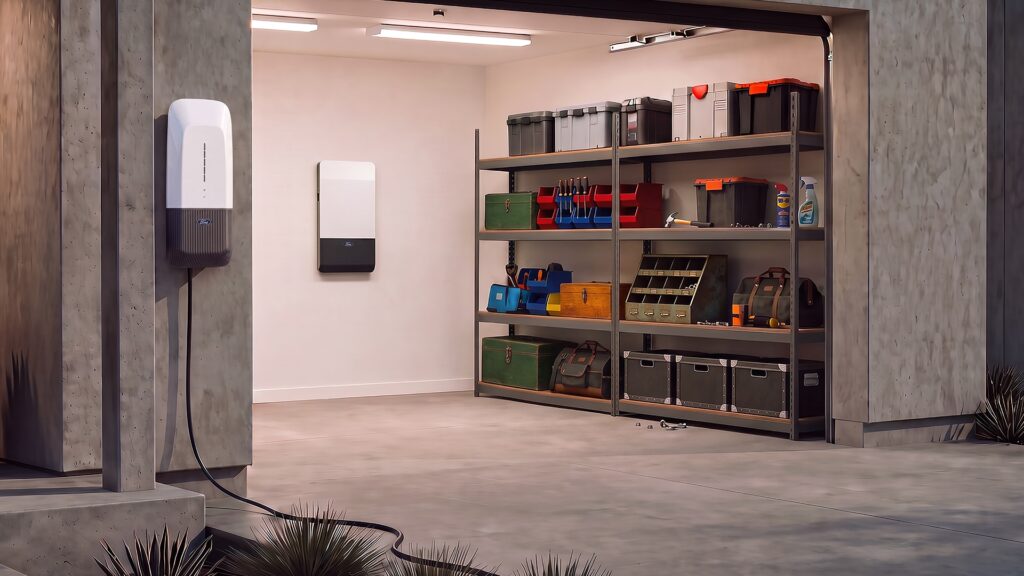
Ford describes two related configurations. Home Power Management uses a Ford Home Power Station to charge the truck when electricity is cheaper and send energy back to the house when rates rise. Ford says this setup is expected to cost about half as much as its first-generation bidirectional charger. It also requires an active plan or trial and utility approval.
Home Backup Power adds a Ford Home Backup Power Panel so the truck can supply selected household circuits when the grid goes down. Ford expects the combined hardware to cost at least 60 percent less than its earlier backup system.
Those percentages are not final retail prices. Independent reporting estimates roughly $650 for the power station and around $2,100 for the station-and-panel package by comparing Ford’s targets with earlier equipment. Installation, permits, wiring, electrical-panel changes and any required soft-start equipment would be additional. Homes with older service panels could face a much larger bill than homes already prepared for high-power EV charging.
Why the built-in inverter matters
Bidirectional charging is not new. The practical barrier has been the combined price of the vehicle, specialized power electronics and electrical work. Moving the inverter into a sub-$30,000 truck could lower the entry cost and make vehicle-to-home power relevant to more buyers.
It also makes the capability easier to explain. The truck produces home-ready AC power, while the external equipment manages a safe physical connection, isolation during outages and control of power flow. That is different from plugging appliances into a small vehicle outlet. A permanent home-backup installation must prevent electricity from flowing onto utility lines when crews expect them to be de-energized.
Ford says the system is being designed around applicable UL 1741 requirements and IEEE 1547 interconnection standards. It uses SAE J3068 communications with LIN-CP, a standard intended to help the vehicle and charging equipment coordinate bidirectional AC operation.
Utility approval may be the harder part
Hardware alone does not guarantee that owners can send electricity to the grid. North America has thousands of utilities with different interconnection rules, incentive programs and approval processes. Isolated home backup may be treated differently from operating in parallel with the grid or participating in a virtual power plant.
Ford formed a working group with American Electric Power, BC Hydro, Consumers Energy, Exelon and Pacific Gas and Electric in July 2026. The group is trying to clarify when interconnection review is required and how rules written for rooftop solar and stationary batteries should apply to mobile batteries.
That work matters for customers hoping to save money. Charging overnight and powering a home during peak rates only helps where rate plans create a meaningful price difference. Selling energy or grid services requires an eligible utility program, compatible equipment and an owner willing to keep the truck plugged in when the grid needs it.
What buyers get for $28,350
Ford says the base price applies to a standard-range Fathom, but the company has not released its EPA-estimated range. The truck is projected to have more passenger space than a Toyota RAV4 and includes a large center display, Apple Maps navigation, Apple CarPlay, Android Auto, Digital Key and Ford app controls.
Every model will be capable of Ford’s next-generation BlueCruise hands-free highway system, although “capable” does not necessarily mean ongoing service is included at no extra charge. Preorders are expected to open in early 2027. Ford has not yet confirmed when customer deliveries will begin within the year or how many trucks it expects to build.
The $28,350 MSRP excludes the $1,595 destination charge. Dealer pricing, taxes, financing, insurance, options, charging equipment and installation will determine the real cost. Buyers comparing the Fathom with a gasoline generator or stationary home battery should price the complete system rather than the truck alone.
Who this feature could help
The strongest case is a household that already wants an electric truck and also values backup power. Instead of buying a separate large home battery, the owner can use the battery parked in the driveway. The truck may also absorb low-cost or solar-generated electricity and return it to the house later.
There are tradeoffs. The backup battery leaves when the truck is driven away, and frequent discharge cycles may affect long-term battery wear. Ford has not yet detailed warranty treatment, minimum reserve settings, subscription pricing or how the system prioritizes driving range against home energy use.
Apartment residents and renters may not have authority to install the required equipment. Rural owners need to check whether their electrical service can handle the installation. People who depend on medical equipment should still plan for a qualified, redundant backup system rather than assuming a vehicle alone will cover every failure scenario.
What remains unknown
Ford still needs to publish the Fathom’s battery capacity, EPA range, final charging speed, exact home-hardware prices, installation program, subscription terms and warranty rules for bidirectional use. It also has not specified how long a fully charged truck could support a typical home or which loads its standard configuration will prioritize.
The promised cost reduction is meaningful, but installation can erase part of the savings. Local permitting, electrical upgrades and utility approval will vary widely. Final certification and production hardware should be checked when orders open.
For now, the announcement shows how Ford intends to turn the Fathom’s low price into more than a basic transportation pitch. If the company delivers the truck, hardware and approvals near its targets, a vehicle with onboard home-ready AC power could make backup energy a mainstream EV feature rather than a premium experiment.