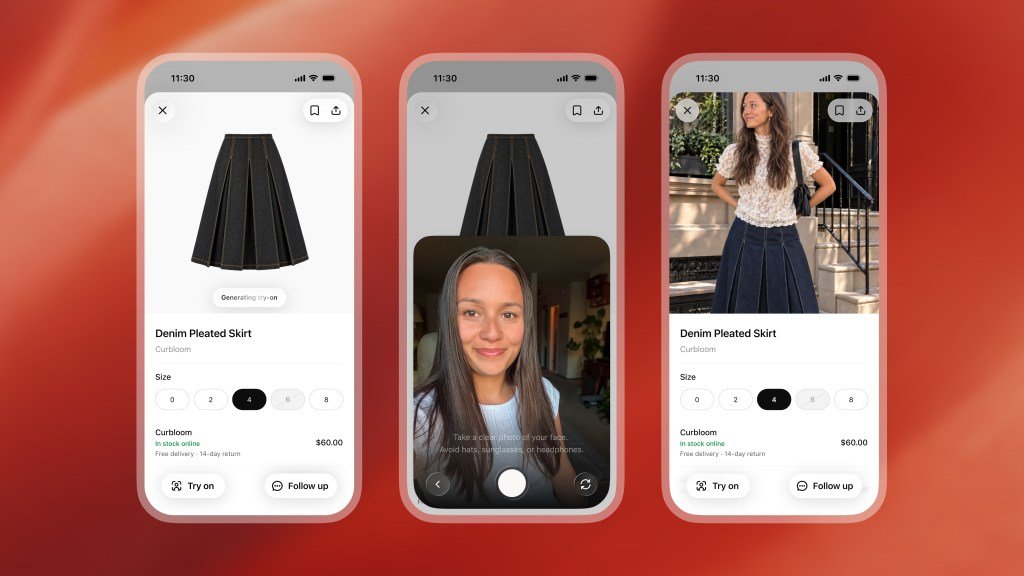
Shopping results in ChatGPT now come with a digital fitting-room option. OpenAI began rolling out a Try on button for clothing and accessories on October 1, letting people upload a photo of themselves and generate an image showing how an item might look. A second feature, Favorites, saves products and organizes them into folders for later.
The tools are available in ChatGPT on the web and mobile. OpenAI has not announced a separate price for either feature, so access and image-generation usage remain tied to the user’s existing ChatGPT plan and limits. The company describes the launch as a new way to shop, but the result is an AI-generated visualization—not a promise that the garment will fit, drape or look the same in person.
How ChatGPT’s virtual try-on works
When ChatGPT shows a supported clothing or accessory listing, users can select Try on, then take or upload a selfie. ChatGPT Images uses that reference photo to make a new picture with the selected product. OpenAI says the reference image is saved for future sessions, which should make repeated try-ons faster.
The feature is not limited to items that ChatGPT finds. According to TechCrunch’s report, users can also upload a screenshot or another image of an item and ask ChatGPT to put it on their photo. That makes the tool potentially useful while browsing stores that do not have a direct ChatGPT integration.
OpenAI says the experience uses its ChatGPT Images 2.5 model, which the company claims offers more natural lighting, richer textures, more reliable editing and lower generation latency. Those are manufacturer claims; the launch does not establish that the system can reproduce precise fabric behavior, sizing or color under every condition.
Favorites turns ChatGPT into a shopping shortlist
The new Favorites control lets shoppers save a product, then create folders to group their choices. Saved products and generated try-on images appear in the user’s ChatGPT Library. In practice, that means someone planning a trip, comparing jackets or assembling an outfit can keep the relevant products inside ChatGPT instead of scattering screenshots across a phone.
OpenAI’s official release notes confirm that both shopping additions are available on mobile and web. The announcement does not list supported retailers, markets or product categories beyond clothing and accessories, so shoppers should expect the Try on button to appear selectively rather than on every product page.
What happens to your reference photo
The convenience comes with an important privacy decision: the photo used for virtual try-on is retained as a reference for future requests. OpenAI says users can change or delete it under Settings → Personalization → Reference photos.
Anyone trying the feature should check the background of the image before uploading it. A simple, well-lit photo without visible documents, addresses or other people reduces the amount of unrelated personal information in the file. Users who only want to test one outfit can remove the reference photo afterward.
Why the result is not a sizing tool
A generated picture can help answer a broad style question—such as whether a color or silhouette suits someone—but it cannot replace a size chart or a retailer’s return policy. The model does not physically measure the shopper, test stretch, account for fabric weight or guarantee that product details have been reproduced at true scale.
There can also be creative changes that the user did not request. The Verge noted that one demonstration altered the person’s hair as well as the clothing. That is a useful warning: compare the generated image with the original product photography and inspect buttons, patterns, hemlines and accessories before treating it as a buying aid.
Who will find it useful
The biggest benefit is speed. Someone choosing between several colors can create rough visual comparisons without visiting a store, while shoppers with a specific look in mind can ask ChatGPT to find similar pieces and save the strongest options. The feature may also help people communicate preferences to friends or family before purchasing.
For retailers, the launch puts product discovery, visualization and saving inside the same conversation. It also moves ChatGPT closer to Google’s established virtual try-on tools and fashion-discovery platforms such as Pinterest. The open question is whether the AI previews will be consistent enough to earn shoppers’ trust.
The practical takeaway
ChatGPT’s virtual try-on is best understood as an inspiration tool. It can make online shopping more visual and reduce the effort needed to compare options, while Favorites gives the results a place to live. But shoppers should still verify measurements, materials, color options, shipping costs and returns on the retailer’s site before paying.
The feature began rolling out on October 1, 2026. If the Try on button is not visible yet, the specific product may not be supported or the rollout may not have reached the account. OpenAI has not published a complete retailer list or an accuracy benchmark for the feature.