AMD is expanding FSR Upscaling 4.1 beyond its newest graphics cards, bringing the machine-learning upscaler to Radeon RX 6000 GPUs, Ryzen AI laptops and mini PCs, and several Ryzen-powered gaming handhelds. Xbox Series X and Series S support is also planned, although AMD has not announced a consumer release date for the consoles.
The update is important for people using hardware that is several years old. Better upscaling can improve image clarity while a game renders internally at a lower resolution. It does not, however, turn every game into a faster or sharper experience automatically. Support still depends on the game, driver, device maker and implementation chosen by the developer.
Which hardware gets FSR 4.1
According to AMD’s October 20 announcement, the expanded list covers five main groups:
- AMD Radeon RX 6000 Series desktop graphics cards.
- Systems using AMD Ryzen AI Max processors.
- Laptops powered by AMD Ryzen AI 9 processors.
- Handhelds with Ryzen AI Z2 Extreme, Ryzen Z2 Extreme or Ryzen Z2 A processors.
- Xbox Series X and Series S consoles, with support listed as “coming soon.”
For supported PC hardware, FSR 4.1 is included in AMD Software: Adrenalin Edition 26.10.1. Handheld users may need an update from the device manufacturer instead of AMD’s general-purpose driver. AMD explicitly says feature availability and timing can vary by device.
Why Radeon RX 6000 support matters
Radeon RX 6000 cards first arrived in 2020. AMD says it optimized the INT8 model previously used for Radeon RX 7000 hardware so FSR 4.1 can now run on the older series.
That gives owners a new image-reconstruction option without requiring a graphics-card purchase. AMD describes the result as a significant improvement in image quality over FSR 3.1, but that is a manufacturer claim. Performance and visual quality can differ by GPU, game, resolution and quality preset, so users should wait for per-game testing before assuming the upgrade will be equally useful everywhere.
Upscaling also involves a tradeoff. A game renders fewer pixels and reconstructs a higher-resolution image, which can improve speed or make a higher output resolution practical. Poor implementation may still produce shimmering, ghosting or fine-detail problems, especially in motion.
A smaller model targets laptops and handhelds
AMD created a more efficient version of FSR 4.1 for Ryzen AI 9 and Ryzen Z2-class processors. The company says this streamlined model is designed around the performance and power limits of mainstream laptops and portable gaming systems.
Devices specifically named by AMD include the ASUS ROG Xbox Ally X, which uses a Ryzen AI Z2 Extreme processor. Ryzen AI Max systems—including certain laptops, compact workstations and tablets—can use the broader FSR 4.1 implementation.
The handheld angle may be the most practical part of the announcement. Small gaming PCs often have to balance frame rate, image quality, battery life and heat. A lighter upscaler could help, but AMD did not provide a universal battery-life figure or promise that every supported game will use less power.
Xbox support has no firm date
AMD says FSR 4.1 is coming to Xbox Series X and Series S. Xbox CTO Scott Van Vliet appeared in AMD’s announcement and said the companies have worked together to optimize the technology.
Console owners should read “coming soon” carefully. The announcement does not give a system-update date, name launch games or guarantee that existing titles will be upgraded. Developers will need access to the technology and will decide how—or whether—to add it to individual games.
The potential benefit may be particularly interesting on Series S, where developers work with tighter performance limits than on Series X. Still, image quality and frame-rate gains cannot be judged until shipping games are tested on the actual consoles.
FSR 4.1 does not update every game by itself
FSR is a toolkit used by game developers. Installing a compatible Radeon driver makes the required support available on a PC, but it does not automatically replace the upscaler inside every game.
Players should look for a game update and an FSR option in the graphics menu. Some titles may offer several modes, such as Quality, Balanced and Performance. Quality mode usually starts with a higher internal resolution, while Performance mode sacrifices more source detail in pursuit of speed.
AMD has not published one guaranteed frame-rate uplift for all of the newly supported devices. Any improvement depends on the workload and on whether the game is limited by graphics performance, processor performance or another bottleneck.
Other changes are coming
AMD also announced planned Vulkan support for FSR 4, improvements to frame pacing for FSR Frame Generation and wider availability for its ray-reconstruction technology. The newsroom post does not provide a complete rollout schedule for each of those changes.
Frame generation and upscaling serve different jobs. Upscaling reconstructs a higher-resolution image from a lower-resolution render, while frame generation creates additional frames between conventionally rendered ones. An advertised frame-rate increase from generated frames does not necessarily mean input response improves by the same amount.
What users should do now
- Confirm the exact GPU or processor model before installing an update.
- Use the driver supplied by the handheld or laptop maker when AMD directs owners to the manufacturer.
- Check release notes and create a restore point before changing graphics drivers.
- Verify that a game specifically supports FSR 4.1.
- Compare image quality and frame rate in the same scene and preset.
- Do not assume Xbox support is active until Microsoft or the game developer confirms it.
The practical takeaway
FSR 4.1’s expansion gives older Radeon cards and compact Ryzen systems a potentially useful upgrade without new hardware. The broader device support is more meaningful than a headline benchmark because it reaches desktop PCs, laptops and handhelds that people already own.
The limits are equally clear: results vary by game, OEM drivers may arrive on different schedules, and Xbox support remains undated. For now, PC users with supported hardware can evaluate the 26.10.1 driver, while console owners should wait for confirmed game and system updates.
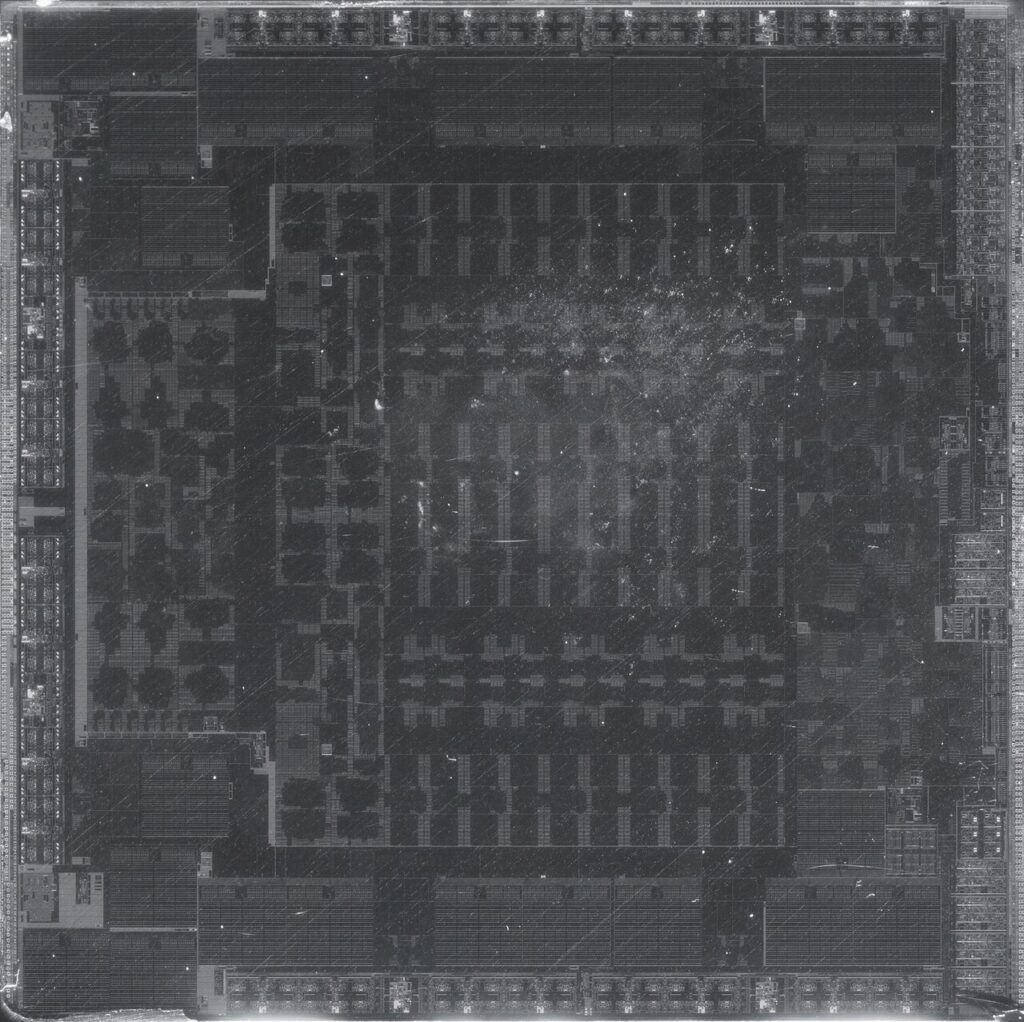
Image credit: FritzchensFritz via Wikimedia Commons, CC0 1.0. Macro near-infrared photograph of the AMD Radeon RX 6700 XT Navi 22 chip.