Germany has approved a new framework that allows compatible electric vehicles to do more than draw power from the grid. Under the MiSpeL rules adopted on October 1, 2026, an EV battery can store electricity for later use in a home or send it back to the public grid without automatically stripping eligible rooftop-solar electricity of its renewable-energy support.
The decision does not make every electric car a plug-and-play home battery. Owners still need a vehicle and charger that support bidirectional power, suitable metering, a participating electricity plan and approval from the relevant grid and metering operators during the transition. Even so, the change removes an important accounting barrier that had kept vehicle-to-grid technology from being commercially useful in Germany.
What Germany changed
Germany’s Federal Network Agency, the Bundesnetzagentur, calls the framework MiSpeL, short for the market integration of storage and charging points. It applies to stationary batteries and bidirectional EV chargers.
Previously, subsidized renewable electricity and electricity bought from the grid had to be kept strictly separate inside a storage system. A battery that mixed rooftop-solar power with grid power risked losing support under Germany’s Renewable Energy Sources Act, known as the EEG. Bidirectional charging points were effectively excluded from the existing arrangement.
MiSpeL replaces that rigid separation with accounting rules designed to identify how much exported electricity is eligible renewable power and how much is previously purchased grid power. This means a household can charge when electricity is abundant or inexpensive, use stored energy later, and potentially export at a more valuable time.
Two accounting routes, with different tradeoffs
The regulator created two options. The “separation option” is open to all eligible users and uses formulas based on electricity measured in 15-minute intervals. It will normally require two meters, although the regulator says some configurations can work with one. This route is more precise but also more complex.
A simplified “flat-rate option” is intended for households with solar installations of up to 30 kWp. It generally needs only one meter and uses standardized assumptions rather than measuring every energy flow separately. That could make participation easier for ordinary households.
There are important timing limits. According to the regulator’s final decision page, grid and metering companies have until the end of September 2027 to implement the framework. Before then, a household can use the new options only with both operators’ agreement. The simplified option also depends on European Commission approval of its state-aid basis.
How vehicle-to-home and vehicle-to-grid differ
Vehicle-to-home, or V2H, uses the car battery to run household loads. That could mean using stored solar power after sunset, avoiding expensive peak-rate electricity or keeping selected circuits operating during an outage—if the installation is designed and approved for backup use.
Vehicle-to-grid, or V2G, sends energy beyond the home and into the public network. A utility or energy service can coordinate many connected cars, charging them when supply is plentiful and discharging a controlled amount when demand and prices rise.
MiSpeL supports the economics behind both ideas, but it does not replace electrical safety equipment or grid-connection rules. A normal one-way home charger cannot send electricity back. The car, charging equipment, inverter, energy-management system and electricity contract all have to support the intended function.
Why the rule matters for EV owners
An EV battery is often many times larger than a typical home battery. When the car is parked, some of that capacity could help a household consume more of its own solar generation or respond to time-varying electricity prices.
The Federal Network Agency says the new rules allow users to benefit from lower prices when renewable generation is high and potentially earn more by exporting when market prices are higher. Electricity originally generated by an eligible renewable system can retain proportional EEG support after temporary storage. Grid electricity that is later returned can also receive proportional relief from certain levies and network charges through settlement.
That does not guarantee profit. Savings depend on the vehicle’s availability, battery size, charging losses, energy prices, equipment cost, program fees and the amount of battery capacity the owner is willing to share. Owners should also check the automaker’s battery warranty and any limits on bidirectional use.
What this does not mean
The ruling applies to Germany; it does not change electric-utility rules in the United States or elsewhere. It also does not mean that every EV sold in Germany suddenly supports V2G. Hardware support remains limited, and some vehicles can provide power only through specific chargers or manufacturer-backed programs.
It would also be misleading to describe the car as an automatic whole-home generator. Backup operation requires a system that safely isolates the home during an outage so energy cannot flow onto a de-energized grid. Installation requirements and costs will vary by property.
The practical takeaway
For German households already planning solar, an EV and a home energy-management system, MiSpeL makes bidirectional charging more credible—but not immediately simple. Buyers should ask whether the exact car and charger support V2H or V2G, whether the local grid operator is ready, what metering is required and which tariff pays for exported flexibility.
The biggest near-term impact may be on product planning. Automakers, charger companies and electricity providers now have a clearer route to build commercial services around EV batteries. The rules remove one regulatory obstacle; compatible hardware, affordable installation and workable tariffs still have to follow.
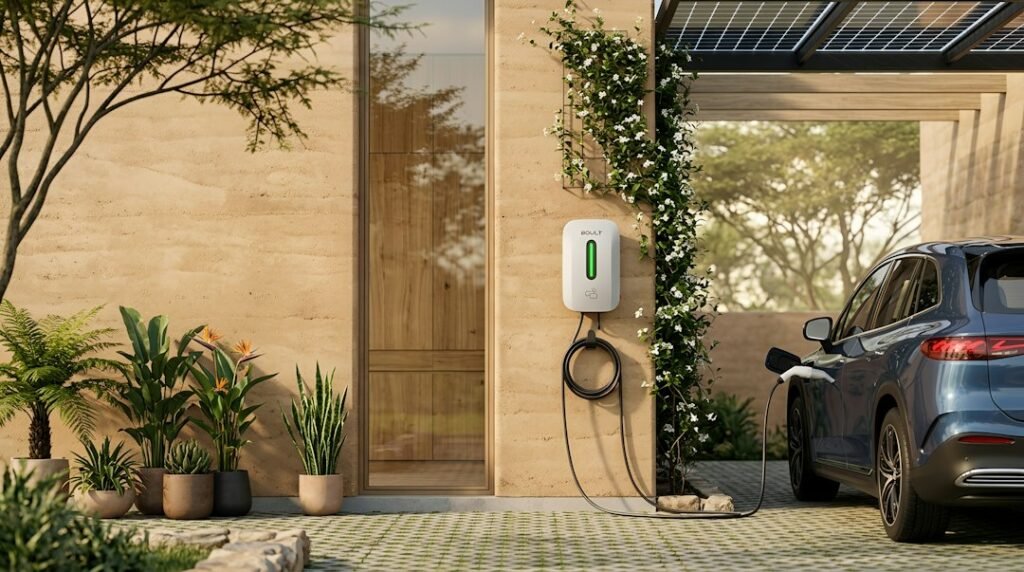
Featured image is illustrative: EV charging at a solar-equipped home. Photo by Christian Rebero Twahirwa on Unsplash.