Magnetic tape is not disappearing into a museum. Fujifilm plans to invest roughly ¥10 billion to increase its data-storage tape manufacturing capacity about fivefold, pointing to the rapid growth of generative AI and cloud archives as the reason.
The expansion, announced on October 29, 2026, will take place at Fujifilm’s Kanagawa Factory, Odawara Site in Japan. Spending is scheduled across fiscal 2026 through fiscal 2028 and will cover new manufacturing equipment as well as additional staff. Fujifilm says the five-times increase is measured by shipment capacity against its fiscal 2025 level.
What Fujifilm is expanding
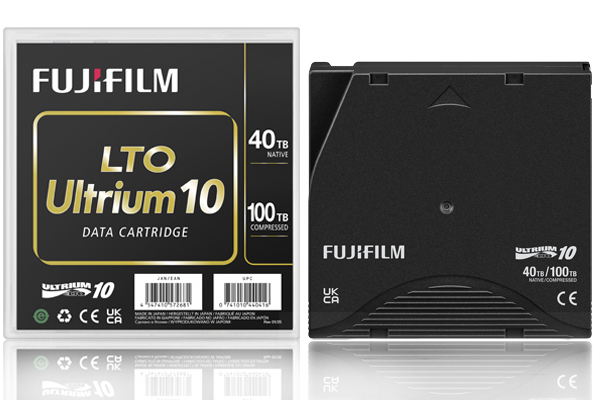
The new investment focuses mainly on Fujifilm’s latest LTO Ultrium 10 cartridges. LTO, short for Linear Tape-Open, is an enterprise tape format supported by a technology-provider group that includes HPE, IBM and Quantum. It is used in automated tape libraries, backup systems and long-term archives rather than in ordinary desktop PCs.
Fujifilm calls the project its largest investment so far in facilities dedicated to LTO tape. The company has not disclosed the current number of cartridges it produces, the exact output expected after the expansion, or a quarter-by-quarter construction schedule. “Five times” therefore describes the planned increase in data capacity shipped, not necessarily five times as many physical cartridges.
According to Fujifilm’s announcement, the company expects demand from cloud providers and data-center operators to keep rising as AI training, inference and other digital services generate more data that organizations may want to retain.
How much data fits on LTO-10
Fujifilm currently lists both 30TB and 40TB native-capacity LTO-10 cartridges. With the format’s assumed 2.5:1 compression ratio, those figures rise to 75TB and 100TB. Real compressed capacity depends on the files: video, photos and already-compressed archives may shrink very little, so native capacity is the safer number for planning.
The company’s specifications list a native transfer rate of up to 400MB per second for LTO-10, with compressed throughput depending on the drive interface and the data. That can be efficient for large sequential transfers, but tape is not a substitute for an SSD when an application needs instant access to many small files.
LTO-10 also makes a major compatibility break. Its cartridges require an LTO-10 drive and cannot be read or written by LTO-9 or earlier drives. The LTO programme says the new head design and capacity changes prevented backward compatibility. An organization moving to the format must therefore budget for drives, library hardware, software validation and migration—not just media.
Why AI data can end up on tape
AI infrastructure is normally associated with GPUs, fast networking and flash storage. Those components matter while models are being trained or serving users, but not every byte must remain on the fastest tier forever.
Training data, model checkpoints, logs, compliance records and older project versions can move into a colder archive after their most active period. Tape offers high capacity in a small physical cartridge and consumes no electricity while sitting on a shelf. A library robot can retrieve a cartridge when needed, accepting longer access time in exchange for lower long-term storage costs.
That tradeoff is why tape and flash are not direct rivals in every workload. Flash is useful for low-latency, frequently accessed data. Hard drives often provide a large online capacity tier. Tape is strongest when data must be kept for years but is accessed infrequently. Large organizations commonly use several tiers and move files between them under policy.
The ransomware benefit needs one important condition
Fujifilm also highlights tape as protection against ransomware because cartridges can be physically isolated from a network. That air gap can preserve a recovery copy even if attackers compromise production systems and connected backups.
But tape is not automatically offline merely because it is tape. A cartridge sitting in a network-controlled library may still be reachable through backup software, and stolen credentials or malicious administrators can damage backup catalogs and retention policies. The protection depends on operational controls: ejecting or vaulting cartridges, restricting administrative access, keeping independent catalogs, testing restores and maintaining more than one copy.
Write Once Read Many, or WORM, cartridges add another option. Data written to WORM media cannot be overwritten, which can help with compliance records and protection from accidental alteration. It does not replace encryption, physical security or a tested disaster-recovery plan.
What changed between LTO-9 and LTO-10
The original 30TB LTO-10 specification increased native capacity from LTO-9’s 18TB by about 67%. The newer 40TB cartridge pushes the native gain to roughly 122%, while preserving the familiar LTO cartridge form factor.
Fujifilm attributes its LTO-10 media to fine hybrid magnetic particles that combine work on barium ferrite and strontium ferrite materials. The 40TB version uses a thinner aramid base film so more tape can fit inside the cartridge. The LTO programme says the media contains 15,104 data tracks, up from 8,960 in LTO-9.
The format also eliminates the lengthy media-optimization process associated with LTO-9. Hardware encryption, LTFS support and WORM media remain part of the generation. These are format capabilities; the way they are exposed and managed still depends on the drive, library and backup software a customer chooses.
Who this matters to—and who it does not
The direct customers are cloud operators, research institutions, broadcasters, government archives and enterprises managing petabytes of information. The factory expansion could improve supply for organizations planning new tape libraries or refreshing older archives.
Home users are unlikely to buy LTO-10. Fujifilm does not publish a consumer retail price for the cartridges, and the required enterprise drives and library systems make the format impractical for most personal backups. A home user is usually better served by multiple hard drives or SSDs, an off-site copy and a reputable cloud service, with regular restore tests.
Consumers may still feel the effect indirectly. Cloud photo libraries, streaming catalogs, scientific services and AI platforms all need economical places to retain data that is not constantly in use. More archival capacity can help providers manage that long tail, although Fujifilm’s announcement makes no promise that storage subscription prices will fall.
What remains unknown
Fujifilm has not provided output volumes, customer commitments, cartridge pricing or a date when the expanded factory reaches full production. It also has not broken down how much of the ¥10 billion will go to equipment versus staffing.
The company’s claim that AI is driving archive demand is plausible and supported by the wider rise in LTO capacity shipments, but it is still a manufacturer’s explanation for its investment. Demand will depend on how aggressively data-center operators retain training sets and models, how storage software evolves, and how tape competes with higher-capacity hard drives and emerging archival systems.
What the announcement establishes is narrower and concrete: Fujifilm is committing its largest-ever dedicated LTO facility investment to increase shipment capacity roughly fivefold by the end of a three-fiscal-year buildout. Far from killing tape, the AI boom is giving one of computing’s oldest storage ideas a new production cycle.