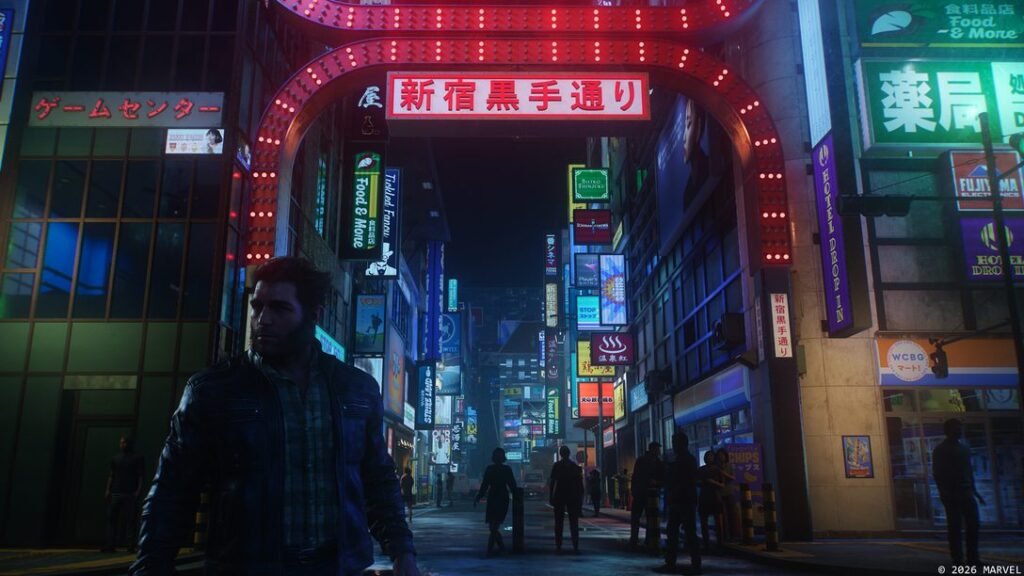
Sony is bringing AI-assisted graphics upscaling to the standard PlayStation 5, giving owners of the original console a new way to improve image quality without buying a PS5 Pro.
The technology is called Quick Spectral Super Resolution, or QSSR. Sony announced it on October 1 and made it available first through patches for Marvel’s Wolverine and Ghost of Yōtei. In both games, QSSR appears as an additional graphics option rather than a universal switch that changes every PS5 title.
That distinction matters. QSSR is a developer tool that must be added to individual games. It is not the same technology tier as the more demanding PlayStation Spectral Super Resolution, or PSSR, used by the PS5 Pro.
What QSSR actually does
Modern games often render at a resolution below the final display resolution to protect frame rate. An upscaler then reconstructs the image for a 4K television. Sony says QSSR uses AI to improve that reconstruction, with the goal of producing finer detail and a steadier image from frame to frame than conventional techniques.
According to the official PlayStation announcement, QSSR combines a streamlined neural-network architecture with a hand-tuned implementation designed for the standard PS5. The work grew out of Project Amethyst, Sony’s graphics collaboration with AMD.
Sony describes QSSR as a new “performance tier” of AI upscaling. That wording is important: the company still calls PSSR on PS5 Pro its gold standard. QSSR has been engineered around the regular PS5’s lower graphics budget and lack of the Pro model’s dedicated machine-learning hardware.
The first two supported PS5 games
Marvel’s Wolverine and Ghost of Yōtei are the first games to offer QSSR. Sony says both received patches on October 1, with the feature presented as an additional graphics option.
Insomniac Games says QSSR improves pixel-level clarity and stability in visually busy locations in Marvel’s Wolverine. Sucker Punch says the technology is particularly useful for preserving fine character and environmental detail in Ghost of Yōtei. Those are developer claims, and results may differ by scene, graphics mode and display.
Sony has not announced a complete list of other games that will receive QSSR updates. It says the library will be offered broadly to PlayStation developers, which opens the door to wider support but does not guarantee that older games will be patched.
Why this is not a free PS5 Pro upgrade
QSSR narrows one part of the feature gap between the standard PS5 and PS5 Pro, but it does not add the Pro console’s faster GPU, upgraded ray tracing or dedicated machine-learning resources. It also does not automatically raise frame rates.
The Verge’s report, citing an early Digital Foundry analysis, notes that developers have to choose different render and output targets on the regular PS5 because QSSR does not have the same performance headroom as PSSR. In practical terms, a developer may use the saved rendering budget for a sharper image, steadier presentation, better effects or some balance of those goals.
The feature therefore depends on each studio’s implementation. A well-tuned QSSR mode could look noticeably cleaner than an existing temporal upscaler, especially around foliage, thin geometry and moving objects. It cannot compensate for every compromise in a game’s graphics mode, and compressed online videos may make differences hard to judge.
What standard PS5 owners need to do
Owners do not need to buy an accessory or subscribe to a new service. They do need the latest patch for a supported game. After updating, look in that game’s display or graphics settings for the QSSR option.
Because support is game-specific, installing current PS5 system software alone will not add QSSR to an unsupported title. Players should also expect studios to use different labels and combinations of resolution, frame-rate and ray-tracing settings.
If a game offers multiple QSSR modes, the best choice will depend on the television and the player’s priorities. A 120Hz display with variable refresh rate may make a performance-focused option more attractive, while a larger 4K screen can make improvements in edge detail and stability easier to see.
What Sony has not confirmed
Sony has not published a universal target resolution, a performance-cost figure or a schedule for broader adoption. It also has not said that every game already using PSSR can be converted automatically, even though the underlying relationship may make adoption easier for some developers.
Tom’s Hardware describes QSSR as an important software-level upgrade rather than a replacement for new hardware. That is the sensible expectation: better reconstruction can extend the useful life of the base console, but it cannot erase the PS5 Pro’s hardware advantage.
Why QSSR matters
The biggest benefit is choice. Developers now have another tool for balancing clarity and performance on the much larger installed base of standard PS5 consoles. If adoption grows, players may see fewer shimmering edges, less unstable fine detail and cleaner images without accepting the cost of a new console.
For now, QSSR is promising but limited. Two supported games demonstrate that the technology is real and shipping, while the lack of a broader compatibility list means most PS5 owners will not see an immediate change across their libraries. The next test is whether third-party studios adopt it—and whether the improvements remain worthwhile across a wider variety of games.
Featured image: Sony Interactive Entertainment / PlayStation Blog.