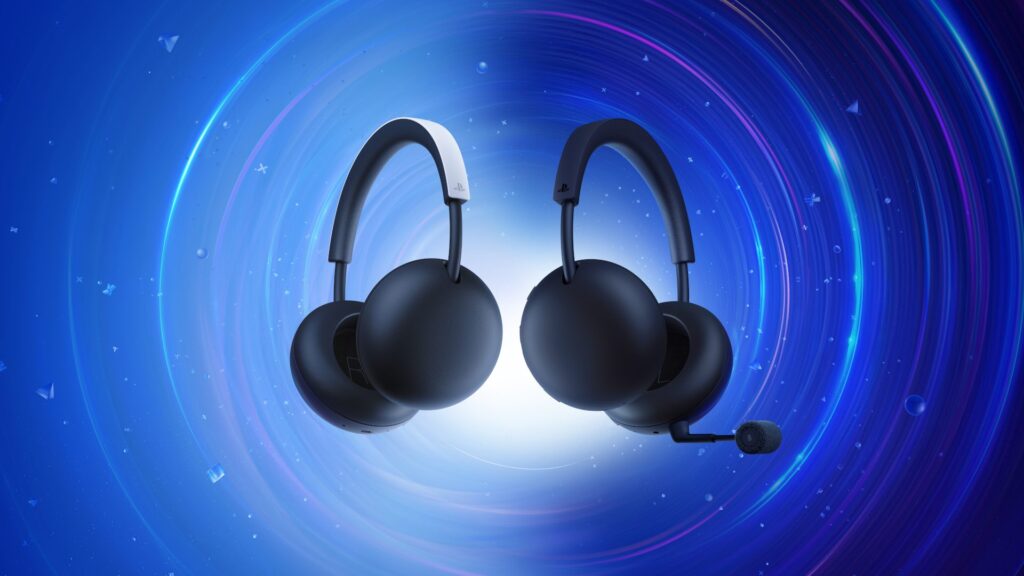
Sony is opening preorders for its new PlayStation Pulse wireless headset on October 29, giving PS5 owners a new $99.99 option built around planar magnetic drivers and PlayStation Link wireless audio. The headset reaches stores on November 19 in White and Midnight Black.
The price is lower than the $149.99 Pulse Elite, but the name can be confusing. This is the standard PlayStation Pulse wireless headset, not the more expensive Pulse Edge model arriving in 2027 and not the older Pulse 3D. Sony has confirmed several core audio and connectivity features, while leaving battery life, weight and charging details undisclosed.
That makes the preorder decision less about a complete review—which is not possible yet—and more about whether the confirmed feature set fits how you play.
PlayStation Pulse price, preorder time and release date
Sony lists a recommended price of $99.99 in the U.S., £89.99 in the U.K., €99.99 in Europe and ¥15,980 in Japan. U.S. preorders begin at 7 a.m. Pacific Time on October 29 through PlayStation Direct. In participating European markets, direct preorders begin at 10 a.m. local time. Other retailers may use their own opening times.
The headset launches on November 19 in the U.S., Canada, Australia, New Zealand, Japan, the U.K. and numerous European markets. Sony says release timing for additional countries will be announced later.
White and Midnight Black are the only confirmed colors. The box includes a PlayStation Link adapter with a USB-C connector, according to Sony’s comparison chart.
Why planar magnetic drivers matter
Most inexpensive gaming headsets use dynamic drivers. The PlayStation Pulse instead uses custom planar magnetic drivers with four magnets per driver. Sony says the larger design produces fuller bass while preserving separation and spatial accuracy.
Planar drivers move a thin diaphragm across a larger area using a magnetic field. In a good implementation, that can improve transient response and make layers of sound easier to distinguish. For games, Sony is specifically pitching clearer directional cues such as footsteps and reloads.
Those are manufacturer claims, not test results. Driver technology alone does not guarantee great tuning, comfort or positional accuracy. The final sound will depend on the acoustic design, software processing and fit, all of which need independent testing after release.
PlayStation Link and Bluetooth can work together
The included PlayStation Link adapter provides what Sony describes as lossless, ultra-low-latency wireless audio. Supported devices include PS5, PlayStation Portal, PC and Mac. The headset can also connect to a compatible Bluetooth device at the same time.
That dual connection is useful in practice. A player could hear low-latency game audio through PlayStation Link while taking a phone call or listening to another source over Bluetooth. Sony’s product page says users do not need to manually switch between the two connections.
The benefit is strongest for PlayStation Portal owners because PlayStation Link is built around Sony’s current gaming-audio ecosystem. Buyers using a phone, Xbox or another device should verify compatibility carefully; Sony has not described the Pulse as a universal console headset.
The microphone is built in, not on a boom
PlayStation Pulse uses an integrated microphone with AI-enhanced noise rejection. Sony says the processing filters background noise to make voice chat clearer. There is no detachable or retractable boom mic on the standard model.
That keeps the shape cleaner, but microphone placement matters. A mic close to the mouth usually has an easier job isolating speech than one built into an earcup. Sony has not published standardized microphone measurements, so buyers who stream, record commentary or play in a noisy room should wait for real-world voice samples.
The earcups rotate flat for easier storage. Sony says the redesigned frame targets comfort and durability, but it has not disclosed the weight, clamping force, pad material or replacement-part policy.
What the $99.99 Pulse leaves out
Sony’s official comparison table makes the standard headset’s limits unusually clear. PlayStation Pulse does not include:
- Active noise cancellation
- A detachable boom microphone
- A 3.5 mm audio and microphone jack
- Dedicated PS5 game/chat balance controls on the headset
- A carrying case
Built-in volume control is present. Sony’s broader product page also says users can adjust presets, volume and audio/chat balance, but the dedicated physical game/chat balance control is reserved for Pulse Edge. The standard model therefore relies more heavily on console or software controls.
The lack of a 3.5 mm jack is particularly important. It removes a simple wired fallback for drained batteries, older controllers and devices without PlayStation Link or suitable Bluetooth support.
How Pulse differs from Pulse Edge
Pulse Edge is the premium sibling planned for early 2027. It uses eight magnets per planar driver—double the standard model’s four—and adds active noise cancellation, premium materials, a detachable boom mic with a hidden backup mic, dedicated PS5 game/chat balance controls, a 3.5 mm jack and a carrying case.
Sony has not announced a price or exact launch date for Pulse Edge. That uncertainty makes it impossible to calculate the upgrade value today. The Edge may appeal to buyers who travel, play in loud rooms or want a boom mic and wired option, but waiting could mean several more months without a headset.
The $99.99 Pulse is the simpler choice: the same broad planar-driver and dual-wireless concept, with fewer physical controls and no noise cancellation.
Major specifications Sony has not confirmed
Several everyday details are still missing from Sony’s announcement and product page. The company has not provided a battery-life estimate for the standard Pulse, a charging time, a quick-charge claim, total weight, Bluetooth codec list or a full compatibility matrix.
Battery life is the biggest unknown. The older Pulse Elite advertises up to 30 hours, but that figure should not be assumed for a different model and chassis. Sony’s comparison table also does not say whether the standard Pulse can mix PlayStation Link and Bluetooth audio at identical volume levels or how controls behave on PC and Mac.
There is also no hands-on evidence yet for comfort, microphone quality, wireless stability, bass balance or durability. Preordering means accepting those unknowns until independent reviews appear.
Who should consider it?
The PlayStation Pulse makes the most sense for PS5 or PlayStation Portal owners who want low-latency wireless audio, simultaneous phone connectivity and planar drivers near the $100 mark. It may also be attractive for a shared PS5-and-PC setup because the included USB-C adapter supports both platforms.
It is less suitable for anyone who needs active noise cancellation, a wired analog fallback, a boom microphone or headset-mounted game/chat mixing. Competitive players should also remember that “planar magnetic” describes the driver system, not guaranteed performance in every game.
For buyers who already own Pulse Elite, the new standard Pulse is not an obvious upgrade. Elite already offers planar drivers, PlayStation Link, Bluetooth and a retractable boom mic, plus a published 30-hour battery claim. The new model’s strongest arguments are its lower price, flatter-folding design and refreshed form factor.
Should you preorder?
The $99.99 price is appealing for a first-party PlayStation headset with planar drivers and simultaneous PlayStation Link and Bluetooth connectivity. Sony has also been unusually direct about the features reserved for Pulse Edge, which reduces the risk of expecting ANC or a wired jack that is not there.
Still, battery life, comfort and microphone performance are central to any wireless-headset purchase, and none can be judged from specifications alone. Buyers who do not need the headset on launch day lose little by waiting for reviews and complete battery information.
Preorders begin October 29, with retail availability on November 19. The practical choice is straightforward: preorder only if the confirmed PS5-focused feature set is enough; otherwise wait for testing—or for Sony to price the more capable Pulse Edge.