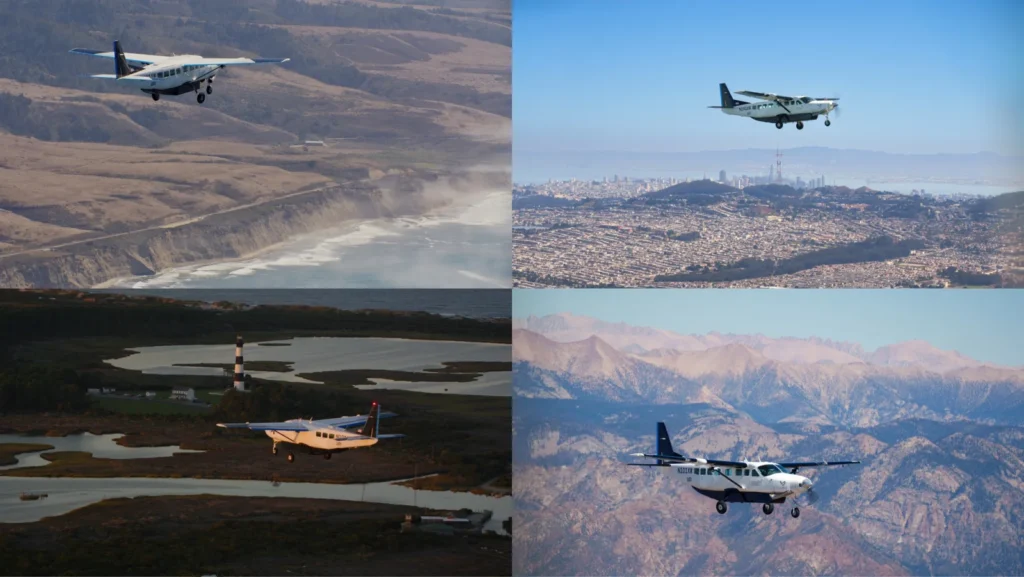
Joby Aviation said on September 18, 2026, that a converted Cessna Caravan equipped with its autonomy system completed a 3,199-mile journey from California to North Carolina without control inputs from the safety pilot on board. The aircraft was remotely supervised, so this was not an unsupervised passenger flight—and it was not a flight of Joby’s electric air taxi.
According to Joby’s announcement, the aircraft handled taxiing, takeoff, navigation and landing autonomously during the eastbound leg of its US tour. Joby calls it the first fully autonomous flight across the United States; that priority claim comes from the company.
What actually flew?
The test aircraft is a modified, conventional Cessna Caravan—designated J208 in Joby’s materials—not the battery-electric vertical-takeoff aircraft Joby is developing for city air-taxi service. A safety pilot remained aboard, while personnel at Joby’s California autonomy headquarters and Shaw Air Force Base in South Carolina supervised operations remotely. Joby says the remote supervision was at distances of up to 2,323 miles.
The route began at Buchanan Field Airport in Concord, California, and reached Dare County Regional Airport on North Carolina’s Outer Banks. Joby also lists stops or demonstrations in Phoenix, Fort Worth and South Carolina. It says the system navigated busy airspace and rerouted around severe weather. These are reported company results, not independent safety certification.
Why a cargo aircraft matters
Fitting autonomy technology to an existing aircraft type could provide a different path to market from building a new passenger air taxi. Joby is positioning this system for freight, medical and disaster-response logistics, and defense work. For customers, the practical question is whether it can eventually operate reliably and economically within aviation rules—not merely whether one demonstration route succeeded.
The company says its autonomy system has accumulated more than 400 flights and 800 automated flight hours. It has not announced a consumer fare, a commercial freight launch date or broad authorization for pilotless operations on the strength of this crossing. An onboard safety pilot and remote supervisors remained part of the demonstrated setup.
What comes next
Joby plans a westbound return with further stops, including Raleigh, Louisville, Wichita, Salt Lake City and Portland. Those are plans and may change. Engadget also reported the milestone on September 20. The significant achievement here is a supervised autonomous crossing by a retrofitted airplane; it should not be mistaken for a public, self-flying air-taxi service.
Image: Joby Aviation’s four-photo collage shows its aircraft in flight at several locations; the individual scenes do not independently verify autonomy. This article was prepared with AI assistance, checked against Joby’s release and linked reporting, and does not claim hands-on testing.