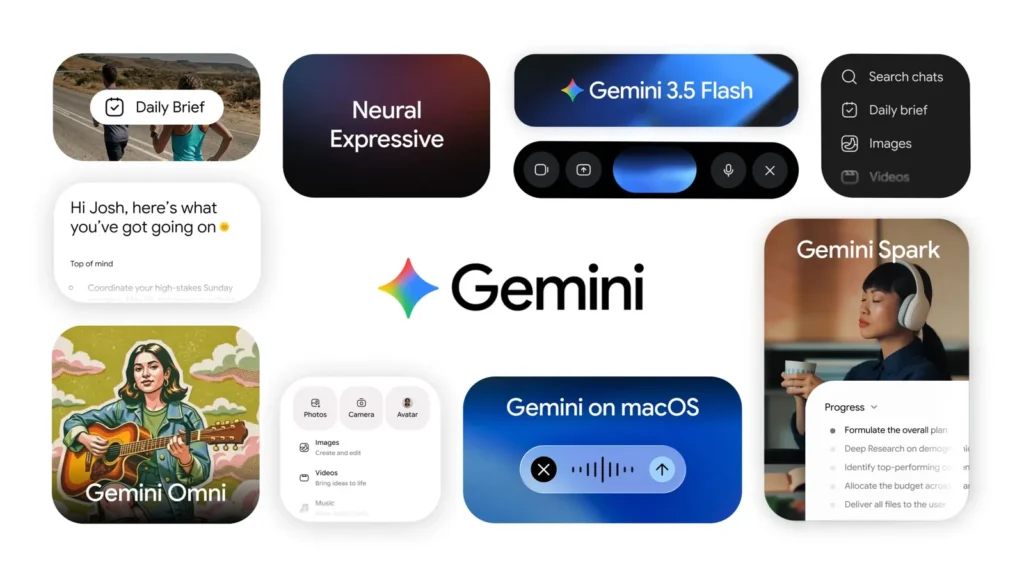
Google is preparing to replace Gemini’s custom Gems with a newer system called Skills. The change matters to people who use Gems as reusable writing assistants, research helpers or workflow templates, because Skills work differently and currently sit inside the paid Gemini Spark experience.
According to a migration notice reported by 9to5Google on September 27, Google will begin automatically moving Gems to Skills on November 17, 2026. Users can continue using a Gem until it is migrated.
What is changing on November 17?
Gems are custom versions of Gemini built around saved instructions. Google’s current Gems overview describes them as custom AI experts that can preserve detailed prompts and use uploaded files for context. That makes them useful for repeatable jobs such as following a house style, reviewing code or acting as a subject-specific study helper.
Skills also save instructions and supporting context, but they are designed as reusable parts of a larger workflow. Google’s new Skills documentation says Gemini Spark can automatically apply a relevant skill in the background. A user can also type a slash in a Spark task to choose a particular skill.
The November migration appears to be Google’s way of consolidating these two overlapping customization systems. However, Google has not yet published a complete public guide explaining exactly how every Gem setting will translate.
Skills can be combined in one task
The most important functional difference is that Skills are modular. Multiple skills can be used together in a single task. For example, one skill could contain a company’s writing rules while another explains how to turn a report into a presentation. Spark can apply both instead of requiring one large all-purpose assistant.
Google says Skills can include instructions, preferences, templates and reference files. Users can build one manually, ask Gemini to create it, start with a template or upload a skill package. A skill can also reference other skills, which could make complicated workflows easier to maintain.
Skills are more closely connected to automation than Gems. In Google’s description of Spark, a task defines what should happen, a schedule defines when it should happen and a skill provides the reusable method. Google says Spark can keep running cloud-based tasks after a laptop is closed or a phone is locked, depending on the task and permissions.
There are significant access limits
Skills are not currently available to every Gemini user. Google’s help page lists several requirements:
- The user must be at least 18 years old.
- A personal Google Account is required; work and school accounts are not currently supported.
- A Google AI Pro or Ultra subscription is required.
- Gemini Apps Activity must be turned on.
- Skills currently work only inside Gemini Spark.
Google also says Skills are unavailable for now in the European Economic Area, Nigeria, Switzerland and the United Kingdom. They can otherwise be used in supported regions through Gemini on the web, the mobile app and the Gemini app for Mac, although the dedicated Skills management page is currently web-based.
Those restrictions create an important unanswered question for Gem users who do not meet the current Spark requirements. Google’s public documentation does not yet explain whether their Gems will remain accessible, be converted but disabled, or require a subscription change after migration.
Files and scripts have their own rules
A Skill package can contain files totaling up to 100MB. Google also allows scripts in uploaded skills, but scripts that require internet access are not currently supported. Its help page says scripts cannot perform actions or requests on external websites.
This means a Skill is not an unrestricted plug-in. It can hold instructions and local supporting material, but outside actions depend on Spark’s supported connected apps and its permission system. Google says users choose which apps Spark connects to and that the service is designed to request approval before high-impact actions such as sending an email or spending money.
What Gem users should do now
People who depend on Gems should review them before November 17. It is sensible to save a copy of important instructions, note which files are attached and record any shared links or default tools being used. That creates a reference if the converted Skill behaves differently.
After migration, users should check whether instructions, reference files and sharing behavior were preserved. They should also test a converted Skill with a low-risk task before using it for publishing, financial work or messages to other people.
There is no reason to rebuild every Gem immediately. Google says Gems remain usable until each one migrates, and the conversion is expected to happen automatically. The key is to keep a backup of the instructions and verify the result rather than assuming every feature will map perfectly.
What Google has not explained yet
Google’s existing help pages explain how Skills work, but they do not yet provide a detailed Gem-to-Skill compatibility chart. It is unclear how shared Gems, default tool choices and accounts outside Spark’s current eligibility rules will be handled. The migration notice’s linked help material also was not working when 9to5Google reported the change.
The broader direction is clear: Google wants saved AI instructions to become building blocks for Spark tasks and schedules, not isolated custom chatbots. Whether that is an upgrade for every Gem user will depend on migration fidelity, subscription access and how Google handles sharing.
Featured image: Google. Availability and requirements can change as the rollout approaches.