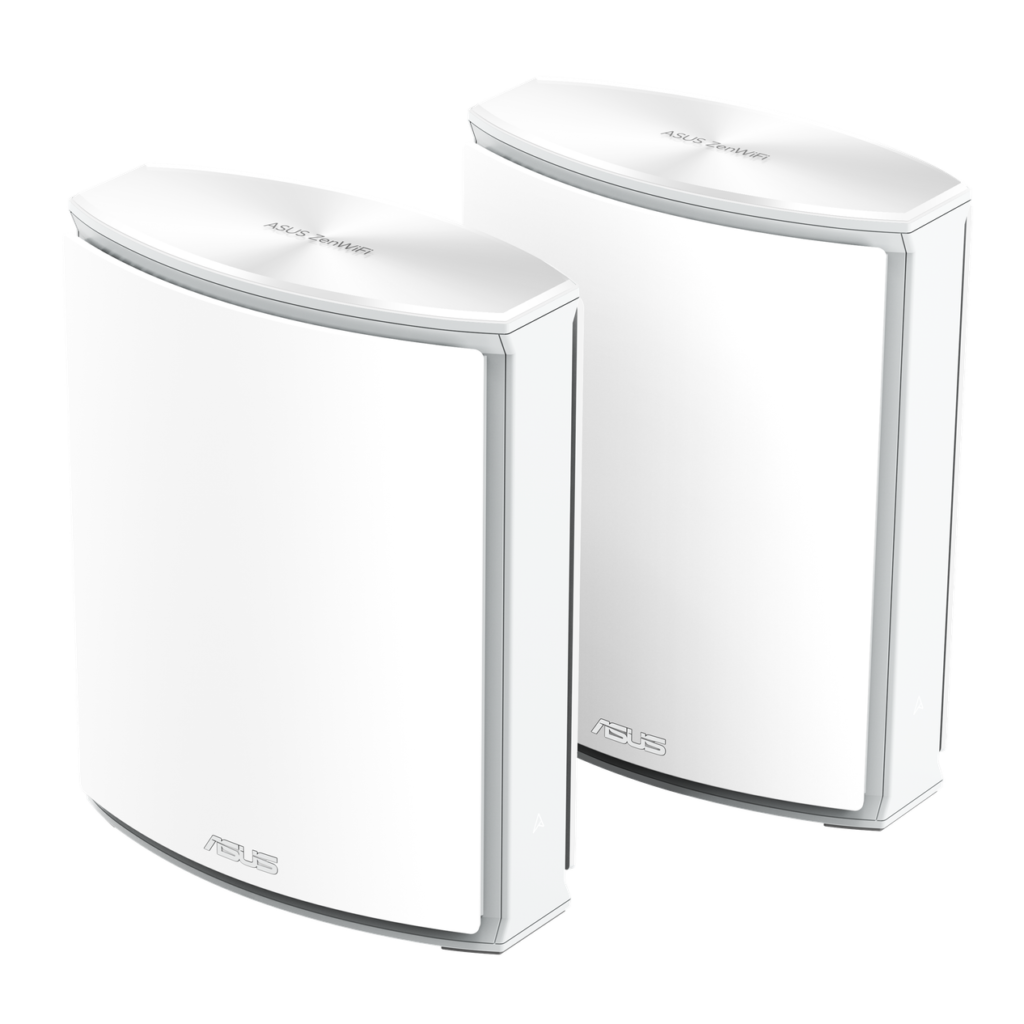
ASUS has started shipping the ZenWiFi BN12, a new whole-home mesh system built around Wi-Fi 8. The company calls it the world’s first Wi-Fi 8 mesh router. Rather than chasing a dramatic increase in headline speed over Wi-Fi 7, the new standard is designed to make wireless links more dependable at longer distances, around interference, and when many devices are competing for airtime.
The timing makes the BN12 an early-adopter product. Its hardware is ambitious, but most phones, laptops, and streaming devices in homes today do not support Wi-Fi 8. That makes the practical question less about the “19Gbps” number on the box and more about whether a household needs a premium mesh system with strong wired connectivity and room to grow.
What is new about the ZenWiFi BN12?
ASUS announced on October 20 that the ZenWiFi BN12 is now shipping. It is a tri-band system using the 2.4GHz, 5GHz, and 6GHz bands, with a combined theoretical wireless capacity of up to 19Gbps. The detailed specifications list a 2.6GHz quad-core processor, 2GB of RAM, eight internal antennas, and 12 wireless streams.
The big change is the emphasis on consistency. Wi-Fi 8, formally IEEE 802.11bn, adds techniques intended to improve performance when signals are weak or the airwaves are crowded. ASUS highlights new modulation and coding options, Unequal Modulation, Non-Primary Channel Access, and coordination between multiple access points. In plain English, the router and mesh nodes have more ways to work around interference and keep slower or distant devices connected.
That could matter in apartments surrounded by neighboring networks, multi-floor homes, and smart homes with low-power sensors near the edge of coverage. It does not guarantee a faster internet connection: the speed of a broadband plan, the client device, building materials, distance, and local interference will still set the real limit.
Mesh coverage and backhaul options
ASUS rates a single BN12 unit for as much as 3,500 square feet and a two-pack for up to 7,000 square feet. Those are manufacturer estimates, not universal results. Brick, concrete, metal, floor layout, node placement, and radio congestion can substantially reduce coverage.
The nodes can use multiple wireless links for backhaul, which is the connection carrying data between mesh points. Homes wired for Ethernet can instead use a 10Gbps wired backhaul. That is especially useful for a multi-gig internet service, a fast network-attached storage box, or a workstation that moves large files inside the home.
Each unit includes one 10GbE WAN/LAN port, one 10GbE LAN port, and three 2.5GbE ports. That is a notably generous wired setup for a mesh product and avoids forcing owners of fast desktops or storage devices onto gigabit Ethernet. USB tethering can also use a compatible 4G or 5G phone or modem as a backup internet connection.
Smarter traffic and troubleshooting tools
The BN12 combines Wi-Fi 8 with ASUS Smart AiMesh, so compatible ASUS routers can be added to the same network. Its Adaptive Quality of Experience feature observes current traffic and changes priorities for activities such as gaming, streaming, video calls, and downloads. ASUS says this is more responsive than a traditional fixed Quality of Service rule set, though actual results will depend on the devices and workload.
WiFi Insight is the more interesting feature for anyone who has struggled to diagnose an inconsistent connection. ASUS says it can analyze Wi-Fi and non-Wi-Fi interference, show network conditions visually, switch channels intelligently, and retain a 24-hour history. That should make it easier to distinguish poor node placement from congestion or a noisy channel.
Security and smart-home controls
ASUS includes AiProtection, router security scanning, malicious-site blocking, Safe Browsing, parental controls, VPN support, and separate network profiles. The Smart Home Master controls can create dedicated networks for IoT devices, children’s devices, guests, or devices that should use a VPN.
Separating smart-home gear from computers and phones is useful because many connected appliances receive updates less consistently. It is not a substitute for maintaining strong passwords and installing firmware updates, but segmentation can reduce the access an untrusted device has to the rest of a home network.
Who should consider it?
The ZenWiFi BN12 makes the most sense for a large or difficult-to-cover home, a multi-gig fiber customer, or a buyer who needs several fast Ethernet ports and is already planning a premium mesh upgrade. It may also appeal to someone building a network expected to remain in service for many years.
Most Wi-Fi 6E and Wi-Fi 7 users should not rush to replace a working system. A Wi-Fi 8 router can still serve older devices, but those clients will not gain Wi-Fi 8-specific capabilities. Early hardware may also cost more while compatible phones, PCs, and adapters remain scarce.
Price and availability remain the key unknowns
ASUS says the ZenWiFi BN12 is shipping and lists one-, two-, and three-unit configurations in its specifications. However, the company’s global announcement does not provide a U.S. price or a precise retailer-by-retailer availability date. Local bundles and availability may vary, so buyers should check their regional ASUS store or retailer before planning an upgrade.
The official ASUS shipping announcement contains the launch details, while the ZenWiFi BN12 product page and technical specifications provide the feature and hardware breakdown.