Nikon has disqualified the original first-place winner of its 2026 Small World in Motion microscopy-video competition after concluding that the entry did not comply with the contest’s rules on generative AI. The company has also revised the rankings and says it will revisit its rules and evaluation process for future entries.
The reversal turns a niche imaging dispute into a useful warning for photographers, researchers and contest organizers: “AI-assisted” processing is not automatically the same as fabricating an image, but disclosure and reproducibility now matter as much as the final picture.
What Nikon changed
The removed entry, submitted by optical engineer Dr. Ning Xu, was presented as a view of tiny hair-like structures called cilia moving in the airway of a child with primary ciliary dyskinesia. The video had originally taken first place in the annual competition.
After specialists publicly questioned whether the movement shown was biologically plausible, Nikon re-examined the video and supporting materials with members of its judging panel. In an updated statement, the company said the entry did not comply with its competition rules regarding generative AI.
Xu later described the post-processing as an “unsupervised neural-network” method used to distinguish and visualize features in reconstructed grayscale images. That description matters because it illustrates the increasingly difficult line between a tool that clarifies source data and one that creates or infers visual information.
Nikon removed the video from the published rankings. The company emphasized that the decision concerns eligibility under the rules and should not be treated as a judgment of Xu’s professional reputation, scientific contributions or intent.
A new first-place winner
The updated first-place position now belongs to Nguyen Nam Nhat for a video showing a tiny roundworm and a single-celled Dileptus exploring their microscopic surroundings. The change is visible in the competition’s revised 2026 gallery.
Under the current Small World in Motion rules, entries must be captured through a light microscope, may run no longer than 60 seconds and may not include sound or graphics. The rules state that AI-generated videos are not permitted and that Nikon may request the original video for verification. First prize is listed as $3,000.
Why the AI distinction is hard
Digital microscopy rarely means untouched camera output. Researchers routinely use reconstruction, denoising, color mapping, stitching, deconvolution and other processing to turn sensor data into an interpretable image. Some of those tools now use machine learning.
The central question is therefore not simply whether AI was present. It is whether processing preserved evidence contained in the source data or introduced features that viewers could reasonably mistake for directly recorded structures or motion.
That distinction can be difficult to judge from a finished clip alone. A neural network can improve contrast or separate signals, but it can also predict missing detail. Even when the workflow is scientifically defensible for a specific analysis, it may not meet the disclosure or authenticity standard of a photography contest.
The Scientist reports that Nikon initially regarded the processing as enhancement of microscopy-generated source data, then reversed course after an additional review. The Verge reports that Nikon now plans to revisit both its rules and evaluation procedures.
What future entrants should do
Anyone entering a photography or scientific-imaging competition should assume that the organizers may ask for a full processing history. A safer workflow includes:
- keeping the original camera files and all intermediate exports;
- recording the software, model and settings used at every processing stage;
- disclosing machine-learning tools even when they are used only for enhancement;
- avoiding generative fill, frame synthesis or inferred detail unless the rules explicitly allow it;
- asking the organizer for written clarification when the rule language is ambiguous.
Contest organizers have work to do as well. A blanket ban on “AI-generated” images may be too vague for modern scientific imaging. Clearer rules could distinguish conventional adjustments, deterministic reconstruction, machine-learning enhancement and content-generating tools. Requiring raw files and a short processing statement from finalists would make those categories easier to enforce.
The practical takeaway
Nikon’s decision does not settle the wider debate over AI in scientific imagery. It does show that contests can no longer treat post-processing as a minor technical detail. When an image carries both artistic value and scientific meaning, viewers need to know what the instrument recorded, what software reconstructed and what a model may have inferred.
For photographers and researchers, transparent documentation is becoming part of the craft. For contest organizers, precise rules and verification are now essential if awards are meant to signal both visual excellence and trust.
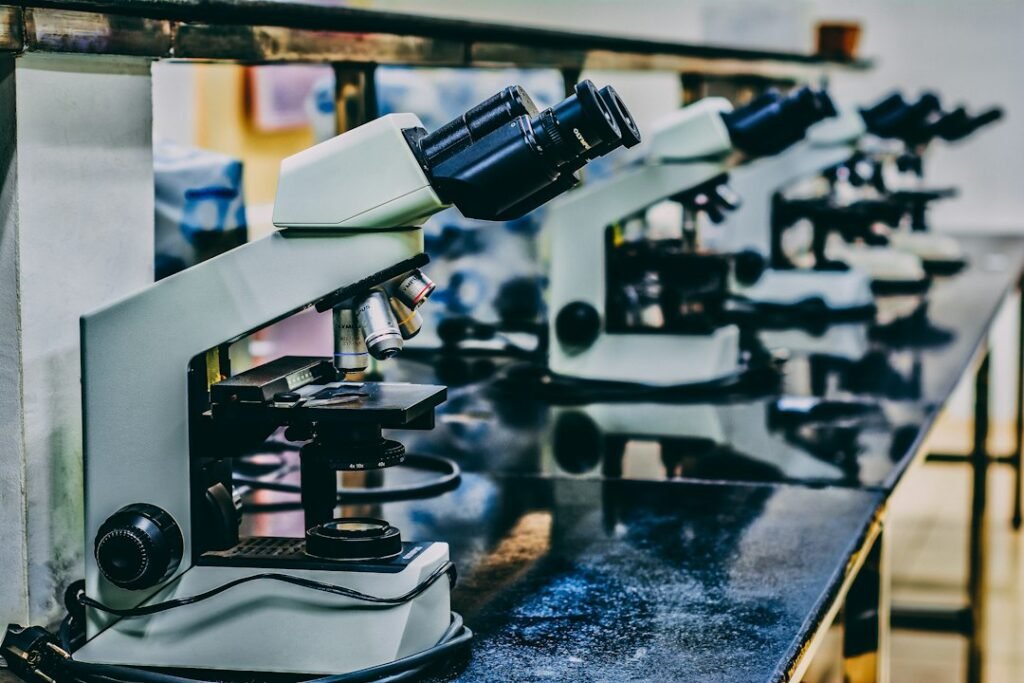
Featured image: Ousa Chea/Unsplash.