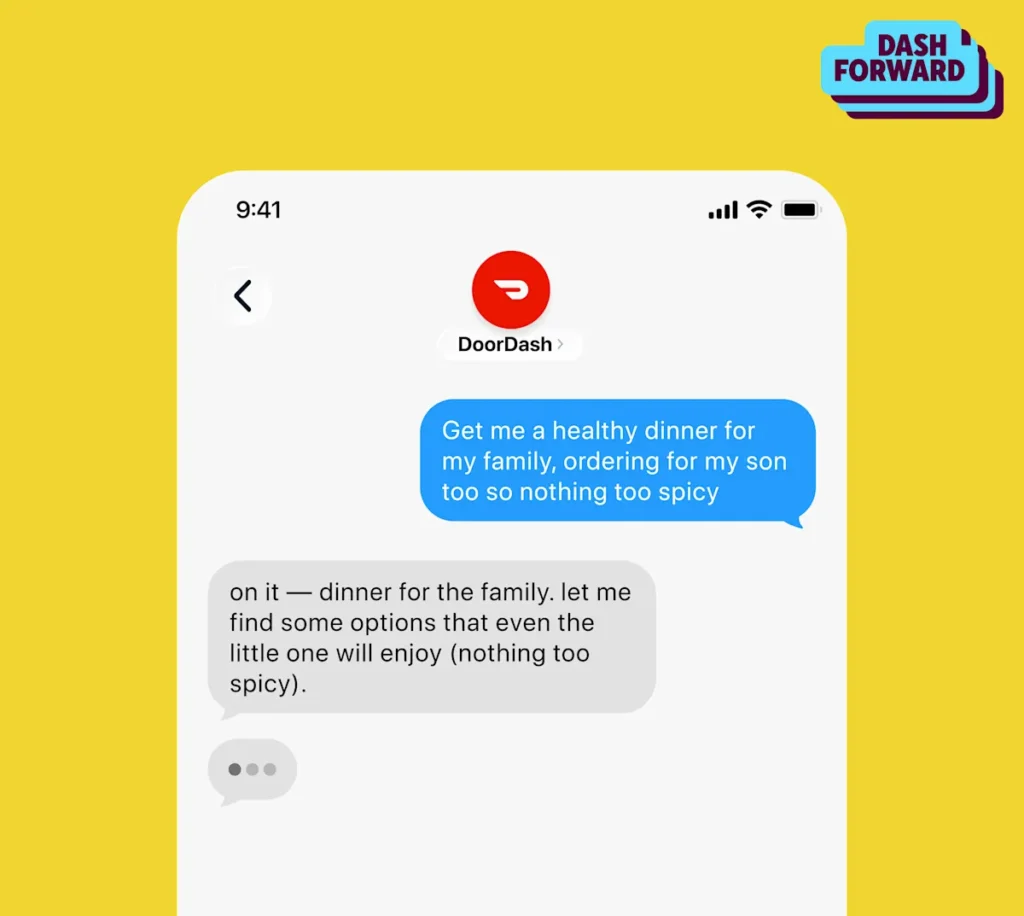
DoorDash is preparing a new way to place delivery orders without opening its app: send the company a text message describing what you want. The conversational ordering system can search nearby restaurants, recommend food, assemble a cart and move the order through checkout inside the text thread.
The feature is not broadly available yet. DoorDash opened a U.S. beta waitlist on September 30 for iPhone users, and it has not announced when everyone will receive access or when an Android version will arrive.
How DoorDash ordering by text works
Instead of navigating restaurant pages and menus, a customer can write a request in ordinary language. That could be a precise order, a general craving or a repeat of something purchased before. DoorDash says the system searches local businesses, scans menus and replies with a suggested cart.
The assistant can also send restaurant-provided food photos into the conversation. Once the customer is satisfied with the cart, DoorDash says the order can be confirmed and checked out without switching to the regular app.
This is an extension of Ask DoorDash, the AI-assisted search and shopping feature that launched inside the app in June. The important change is access: the text interface is meant to remove the browsing and tapping that normally comes before checkout.
“Order my usual” is the central idea
DoorDash is positioning the feature as a personal shopper that learns from a customer’s history and stated preferences. A message such as “order my usual” could refer to a previously purchased meal, including choices such as omitted ingredients or added sauces.
The company says the assistant can remember preferences for later orders and handle mixed dietary needs when building a group order. It may also proactively ask whether a customer wants a habitual coffee or meal at the time they normally order it.
Those capabilities could be useful for repetitive purchases, but they also make confirmation important. A familiar-sounding request can still produce the wrong restaurant, size, substitution or delivery address. Customers should review the proposed cart, total and destination before authorizing payment.
Grocery restocking gets a related update
DoorDash is also adding faster restocking tools to its main app. On a preferred grocery store’s page, customers may see a prompt that rebuilds a cart using frequently purchased products. Items can be removed, replaced or added before checkout.
When Ask DoorDash builds a grocery cart, the company says it can scan the selected store’s inventory for lower-priced equivalents. The potential savings are totaled before checkout, leaving the customer to accept or decline the proposed swaps.
DoorDash says more than 30% of grocery orders placed through Ask DoorDash from mid-August to mid-September were routine restocks. It also claims the assistant built baskets five times faster in a June data sample. These are company measurements, not independent performance tests, and results will vary with the store, inventory and complexity of the request.
Availability is limited to a waitlist
U.S. DoorDash users can apply for the beta through doordash.com/text. The current sign-up is for iOS users, so joining does not guarantee immediate access. DoorDash has not provided a public rollout date, an Android timetable or details about how many people will enter the first test.
The company also has not announced a separate price for conversational ordering. Normal food prices, delivery charges, service fees, taxes, tips and any membership benefits should still depend on the order and the customer’s account. The final checkout total—not the ease of creating the cart—remains the number that matters.
Why ordering outside the app matters
Text ordering is a practical example of “agentic” AI moving from answering questions to completing a transaction. The assistant is not simply recommending a restaurant; it is collecting preferences, choosing items, building the cart and preparing the purchase for approval.
For DoorDash, this could reduce the number of steps between a craving and a completed order. It could also help restaurants appear when a customer asks for a general recommendation instead of searching for a specific business.
For customers, convenience comes with a tradeoff. Better personalization requires the system to use order history and remembered preferences. DoorDash’s announcement does not provide a detailed new privacy explanation for the text beta, so users should check account and communication settings and avoid placing sensitive information in an order message.
What remains unknown
The beta still needs to demonstrate that conversational ordering is dependable when menus, prices and inventory change quickly. It is also unclear how smoothly the system will handle coupons, loyalty benefits, unavailable items, substitutions, split group payments and post-order support.
DoorDash has not claimed that the assistant makes every decision autonomously. Its description emphasizes a suggested cart and user confirmation at checkout, which is a sensible safeguard for a paid transaction.
The feature could be genuinely useful for repeat meals and weekly grocery lists, where the customer’s intent is predictable. More complicated orders will reveal whether texting is actually faster than using the app or simply moves the same decisions into a different interface.
Full details are available in DoorDash’s September 30 announcement. The Verge independently confirmed that the experience is currently a preview with a U.S. iOS waitlist rather than a general release.