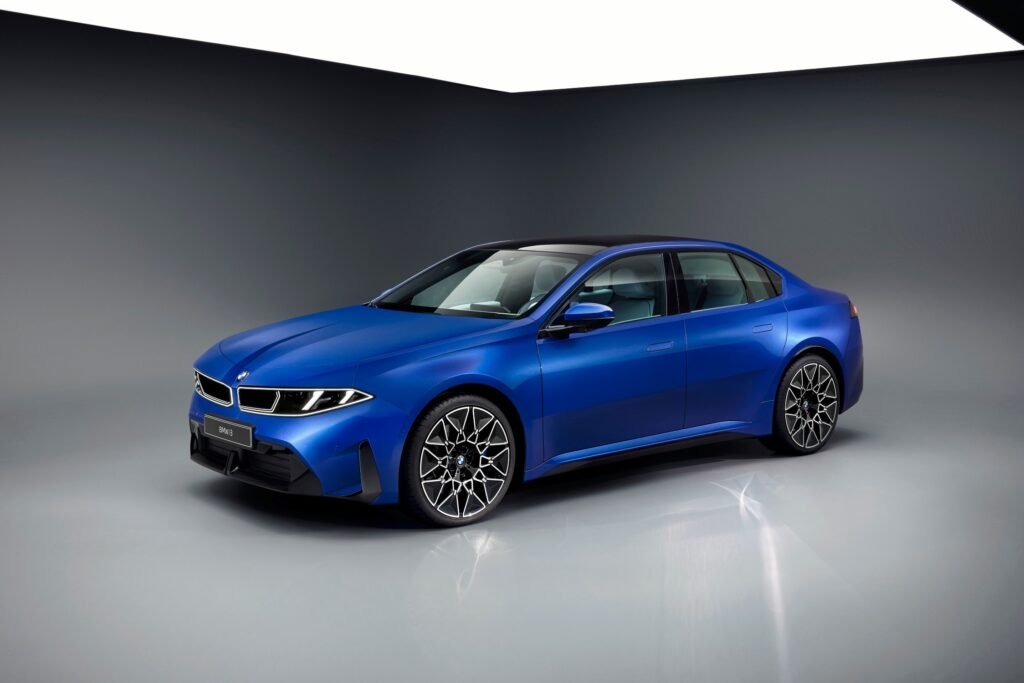
BMW has revealed the U.S.-market 2027 BMW i3 50 xDrive, an electric sedan that brings the i3 name back on a very different kind of car. This time, it is a battery-powered member of the 3 Series family rather than the compact, upright hatchback BMW sold during the 2010s.
The headline numbers are ambitious: a base price of $61,500, dual-motor all-wheel drive, 463 horsepower and a BMW-estimated range of 446 to 468 miles, depending on configuration. U.S. deliveries are scheduled to begin in the first quarter of 2027.
BMW i3 price and U.S. availability
The 2027 BMW i3 50 xDrive will carry a $61,500 base MSRP. BMW also lists a $1,350 destination and handling charge, bringing the starting total to $62,850 before options, taxes and registration fees.
BMW says the car will reach U.S. dealers in the first quarter of 2027. The company has not yet published a full configurator or detailed option prices, so the cost of different paint colors, wheels, driver-assistance packages and interior upgrades remains unknown.
That pricing places the i3 above many mainstream electric sedans but below some luxury EV flagships. Its most important selling point may therefore be how much range and charging speed buyers receive for the money.
The 468-mile figure needs an important caveat
BMW estimates that the i3 50 xDrive will travel between 446 and 468 miles on a charge. Those figures come from preliminary BMW testing based on EPA test procedures. They are not final, certified EPA range ratings.
The distinction matters. Final numbers can change after certification, and the specific wheel and tire combination can affect efficiency. Weather, speed, elevation, cabin heating or air conditioning, and driving style will also influence the distance owners see in daily use.
Even with that caveat, a certified result near BMW’s estimate would put the i3 among the longest-range electric cars available in the United States. It could make the sedan practical for drivers who regularly cover long highway distances and want fewer charging stops.
Dual motors, 463 horsepower and all-wheel drive
The i3 50 xDrive uses one electric motor at each axle for all-wheel drive. BMW quotes a combined output of 463 horsepower and 476 pound-feet of torque. The company estimates a 0-to-60-mph time of 4.5 seconds.
Those figures make this a quick car, but the 50 xDrive is not presented as the top performance model. BMW has also shown an i3 M60 xDrive for other markets, while the U.S. announcement focuses on the 50 xDrive that will launch first.
BMW’s new control system coordinates the drivetrain, braking, energy recovery and steering more closely than before. How that translates to ride quality, steering feel and real-world efficiency will require independent testing after production cars arrive.
Up to 400kW charging on an 800-volt system
The i3 uses BMW’s sixth-generation electric platform with an 800-volt electrical architecture. At a sufficiently powerful compatible DC fast charger, BMW says the car can accept up to 400kW. Under ideal conditions, a 10-minute charging stop is claimed to add roughly 191 to 208 miles of estimated range.
That peak is a maximum, not a guarantee. Actual charging speed depends on battery temperature, state of charge, the charger and site conditions. The charging curve—how long the car can hold a high rate—will be at least as important as the headline peak.
For home and workplace charging, the i3 supports AC charging at up to 15.4kW. BMW also lists vehicle-to-load and vehicle-to-home capability, which could let the car power equipment or support a suitably configured home. Installation details, compatible hardware and U.S. utility requirements will determine how useful those bidirectional features are in practice.
A new battery design, but no U.S. capacity figure yet
BMW is moving to cylindrical battery cells measuring 46 millimeters in diameter and 95 millimeters tall. The company says the new cells deliver 20% greater volumetric energy density than its previous fifth-generation design. The pack is integrated into the vehicle structure rather than treated as a separate box bolted underneath.
BMW has not disclosed the U.S. i3 50 xDrive’s usable battery capacity in its announcement. That leaves an important specification unanswered: buyers cannot yet compare how much stored energy the car carries or calculate its likely real-world efficiency from official U.S. figures.
Panoramic displays replace a traditional gauge cluster
Inside, BMW’s Panoramic iDrive system projects key information across a wide strip at the base of the windshield. A 17.9-inch central touchscreen handles most infotainment and vehicle settings, while an optional 3D head-up display can place navigation and driver-assistance information closer to the driver’s line of sight.
The system runs BMW Operating System X. The company says the interface supports customizable widgets, over-the-air updates and voice control. As with the range and charging claims, usability and responsiveness will need to be judged when finished production software is available.
The i3 can also be equipped with BMW’s attentive hands-free highway-assistance system. On suitable divided highways, the company says it can manage steering and speed at up to 85 mph while the driver remains responsible and attentive. It is a driver-assistance feature, not autonomous driving.
Who should pay attention to the new i3?
The 2027 i3 50 xDrive looks most relevant to shoppers who want a traditional luxury-sedan shape without giving up the long-distance capability associated with larger EVs. Its preliminary range, fast-charging hardware and familiar 3 Series positioning could make it a compelling alternative to electric crossovers.
There are still meaningful unknowns. BMW has not published the final EPA rating, U.S. battery capacity, full equipment list or option pricing. Real-world charging performance and efficiency also remain untested. Those details will determine whether the i3’s impressive specifications translate into an equally strong ownership experience.
BMW’s full technical announcement is available through the BMW Group PressClub. The Verge also reports on the launch and BMW’s decision not to disclose the battery capacity yet.